Sheltered International, Author at SiShips - Page 7 of 12

Skip to Content

Shanghai Reopens; Work to Lessen Backlog Begins

Recent Posts by Sheltered International

Shanghai Reopens; Work to Lessen Backlog Begins

Resuming Full Production Not as Easy as Flipping Switch

Shanghai is lifting their extreme lockdown and not a moment too soon. While originally intended to be a two-phase lockdown lasting one week, the near total lockdown of Shanghai stretched to two months before being lifted on June 1st. Chinese citizens are relieved after a frightening and confusing time.

shanghai port china freight forwarding global supply chain biden putin ukraine lockdown China has enforced the most stringent restrictions worldwide since March 2020. The goal of reaching community zero-COVID has frustrated Shanghai, especially. Citizens who had been separated from family and basic needs were trapped by muddled messaging from the government. Amid positive trends in cases, “some Shanghai districts tightened restrictions on movement, and even in neighborhoods that met criteria for people to be allowed to leave their homes officials were ordering them to stay put,” as recently as Friday, April 22nd according to Reuters.

Signs of life returning to normal are evident across China, with even Hong Kong Disneyland reopening after an extended closure. However, the work to bring the world’s second largest economy back to full power is just beginning.

Truckers Hit Hard by Covid Restrictions

While the port of Shanghai officially remained open during the lockdown, it was far from operating at regular volume. The daily cargo volume hovered around 100,000 containers per day, down roughly 30% from the norm of 140,000 containers. Even the containers that made it through the port have piled up as truckers inside China face roadblocks and quarantines.

Some truck drivers were forced to remain for multiple days in the cab of their trucks due to the tight restrictions around Shanghai. After hearing horror stories from fellow truck drivers, some refused to travel. The lack of available truck drivers increased the amount of containers at the port and nearly doubled the cost of domestic transportation involving Shanghai.

Prognosticators say it could take weeks, or even months, for international shipping to return to normal.

shanghai china lockdown coronavirus zero covid government coronavirus cases breakout pandemic endemic shipping supply chainReopening Logistics Present Difficult Hurdle

The Chinese government is doing all they can to ease the stress of the present situation. This includes providing 80,000 Shanghai businesses based in government-owned buildings with six months free rent. Despite this and other incentives, it will take time for the city to ramp up to full capacity. Goods and materials being delivered to Shanghai were nearly stopped completely during the strict lockdown.

“Shanghai is coming back with a vengeance,” predicted Tesla CEO Elon Musk during an earnings call on April 20th. The Tesla plant in Shanghai, known as Gigafactory, restarted production after a 3 week long disruption the day before. Gigafactory workers are taking multiple Covid tests each day while living and working entirely within the factory premises. Tesla was one of the first factories to resume full production during the shutdown.

Tesla remains susceptible, like every other automotive company, to the semiconductor shortage that has plagued the globe for the last two years. Most factories in Shanghai, while no longer lacking workers, do not have enough materials to operate. They are waiting for the trucking apparatus to fully restart and remove the backlog from ports. 

The dominoes of the global supply chain have been knocked down, but with the help of easing restrictions in China they are slowly being set back up.


How SiShips Gives You The Advantage

Sheltered International combines expertise with state of the art software to bring you the highest quality domestic and international shipping solutions. With the world constantly changing, SiShips puts the shipper in control, offering efficient and cost effective ways to ship your product.

To learn more about managed transportation with SiShips, or to view a demo of our software, contact us today.

0 Continue Reading →

WHO: China’s Zero-Covid Policy is Not Realistic

Omicron Variant Causing New Challenges for China’s Zero-Covid Policy

Over the past two years, the world has alternatively applauded and criticized China for its approach to handling the coronavirus pandemic. During the peak of the outbreak, 960 million people were living under some form of lockdown when China first instituted their “zero-COVID” policy. The tough regulations were viewed as a success when restrictions were lifted after five months in May 2020. Individual cases were met with swift action, including shutting down Shanghai Disneyland for two days last November after a single guest tested positive for COVID-19. However, as Shanghai approaches two full months of a strict lockdown in the spring of 2022, it is becoming increasingly clear a zero-COVID policy is unsustainable with the Omicron variant.


Tedros Adhanom Ghebreysus, the Director-General of the World Health Organization, noted during remarks last Tuesday that the virus is drastically different from the original variant identified in Wuhan. “We know the virus better and we have better tools, including vaccines, so that’s why the handling of the virus should actually be different from what we used to do at the start of the pandemic.” Predicting the animus from China following his comments, Tedros added, “regarding their choice of policies, it is up to every country to make that choice.”

Global Balancing Act to Curb Omicron Transmission

Other members of the WHO have echoed support for Tedros’ comments. WHO Emergencies Director Michael Ryan recommended China reconsider its approach to curbing the virus and any measures to combat the spread must show “due respect to individual and human rights”. The WHO has acknowledged extinguishing COVID-19 worldwide is impossible. At the current moment, the focus is on lowering transmission and lessening the impact on society and the economy. “That’s not always an easy calibration,” continued Ryan.


President Xi of China has doubled down on the zero-COVID policy. The Chinese government has made it clear any critics will be punished.

WHO Chief Censored in China

China’s displeasure with the comments from the head of the WHO is apparent. Both the criticism of the zero-COVID policy and Tedros himself have been censored on popular Chinese social media sites Weibo and WeChat.


This comes as a surprising turn of events. The United States had initially criticized Tedros for his support of China’s extreme response to COVID-19. Then president Donald Trump went as far as to initiate the process of withdrawing the United States from the WHO. This decision was reversed by President Biden upon assuming the office. The United States has historically been the largest funder of the WHO.

Economic Fallout from China’s Zero-Covid Policy

Shanghai, China’s most populous city, is slowly making its way out of lockdown. Some shopping malls and markets have reopened. The next step is public transportation resuming operation for limited hours. There are several hundred cases being reported each day. However, this is significantly less than the tens of thousands reported during the peak of the outbreak.

Even if the Chinese government were to lift their domestic zero-COVID policy, the international forecast is not so good. Overseas travel, including freight forwarding, would likely remain severely hampered. The lack of a mass-vaccination program and drop-of-the hat lockdowns following Omicron-related cases has many companies reconsidering their presence in China.

By Sheltered International

Published : October 10 22,at 4:00 5pm

How SiShips Gives
You the Advantage

Sheltered International combines expertise with state of the art software bringing you the highest quality domestic and international shipping solutions. With the world constantly changing, SiShips puts the shipper in control. We offer efficient and cost effective ways to ship your product.

To learn more about managed transportation with SiShips, or to view a demo of our software, contact us today.

0 Continue Reading →

Labor Negotiations Underway with Dockworkers Union

Labor and Management Meet in San Francisco

The International Longshore and Warehouse Union (ILWU) entered contract talks this week with the Pacific Maritime Association (PMA). These labor negotiations come ahead of the July 1 expiration of the current contract and amid backlogs and delays in west coast ports like Los Angeles and Long Beach. Jim McKenna, PMA President and CEO, remains hopeful about the negotiations. “At this point in time,” says McKenna, “you have to be cautiously optimistic that we’re not gonna get into a strike scenario, but it’s early in the game.” Both sides have acknowledged the likelihood of talks continuing past the July 1 deadline, but that outcome does not necessarily mean a strike from the ILWU will take place. 

The biggest focus of negotiations is the right to automate ports. The ILWU stands in firm opposition to automation, something PMA has warmed up to following the pandemic. PMA feels that automation is the only viable solution to prevent future backlogs. The ILWU claims any automation of west coast ports will be the end of thousands of jobs for union workers. 

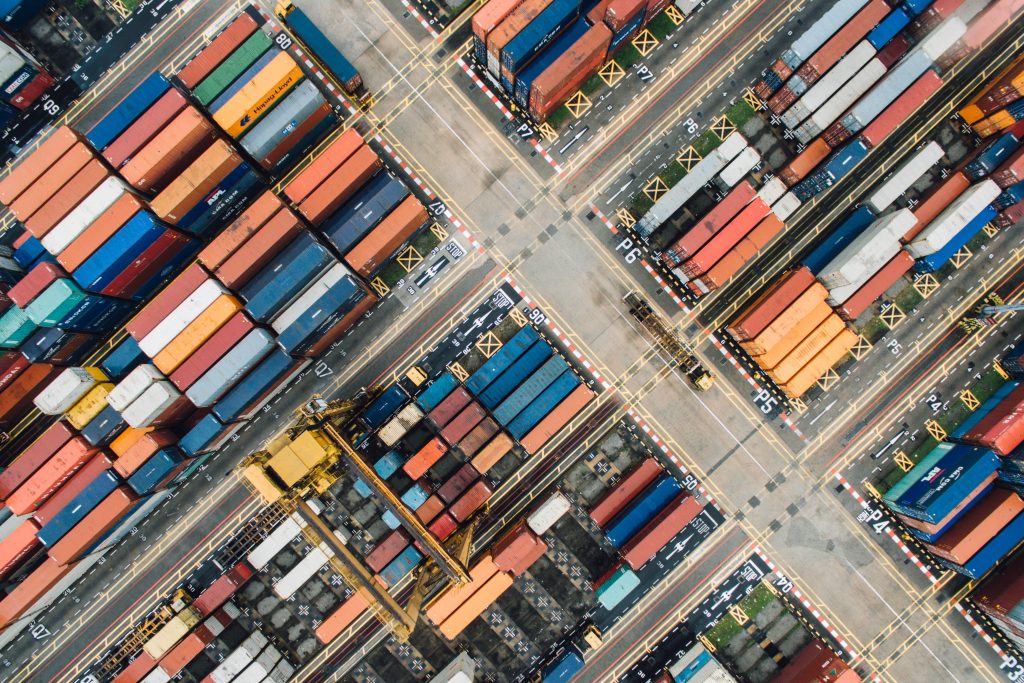
automation port terminal shipping united states domestic international imports exports

Photo courtesy of Chuttersnap via Unsplash

Labor Negotiations Testing an Already Fragile Supply Chain

The backdrop for these negotiations is, of course, the precarious state of the global supply chain. Shanghai, home to the largest port in the world, has been in a strict Covid-19 lockdown for over a month. Russia’s invasion of Ukraine has destabilized Eastern Europe and is leading to an increase in energy prices worldwide. Meanwhile, the ports of Los Angeles and Long Beach are still working through the backlog faced by Covid restrictions and transportation strikes in the United States.

The dockworkers have been a key part of the record profits for shipping companies during the pandemic. The 22,000 members of ILWU could be looking to flex some of their leverage. Past strikes have been crippling for the domestic supply chain, with 44% of global imports entering the United States from the 29 ports on the west coast.

Port Densification as a Sticking Point in Labor Negotiations

The core of management’s argument is automation is unavoidable. Major ports, like Los Angeles, are in urban centers without room to expand. Automation enables ports to grow up, instead of out. As the global population grows alongside disposable income, imports continue to rise and ports need a place to store containers before they are sent out on trucks and trains. Additionally, studies show the output of automated facilities is 44% higher than that of non-automated facilities.

The ILWU counters these claims by saying the rise in productivity at automated facilities has come at the cost of work in other locations. Based on the east coast, the International Longshoremen’s Association (ILA) support their west coast counterparts. The ILA has successfully limited terminal’s right to automate in their contracts. The U.S. Secretary of Labor, Marty Walsh, is monitoring the negotiations carefully and has stated he is willing to intervene if the supply chain is threatened by any potential outcomes. However, Walsh added he is not personally concerned there will be issues come July.

port shipping freight container ship boat international freight forwarding terminal west coast longshoremen dockworkers union negotiations

Photo courtesy of William William via Unsplash

Common Negotiating Ground on Growth

Both sides remain committed to the negotiating table and believe they will find a solution that works for both parties. The ports are at, and have been at, 100% capacity during the recent past. Terminals need to grow to accept more goods, which means more profit for management and more hours for labor unions. There are versions of a new contract where both sides benefit, it simply is a matter of finding that compromise.


How SiShips Gives You the Advantage

Sheltered International combines expertise with state of the art software to bring you the highest quality domestic and international shipping solutions. With the world constantly changing, SiShips puts the shipper in control, offering efficient and cost effective ways to ship your product.

To learn more about managed transportation with SiShips, or to view a demo of our software, contact us today.

1 Continue Reading →

Biden Administration Rolls Back Trade War Tariffs

Some Imports from China to be Excluded from Tariffs

President Biden and his administration will allow some products imported from China to bypass the tariffs imposed by the previous administration. In 2018, President Donald Trump began a trade war with multiple countries, including China. The tariffs and quotas on certain imports obstructed trade and investment, with economists citing its negative impact on the global economy. This follows a U.S.-Japanese agreement to roll back Trump-era steel tariffs.

The Biden administration has faced pressure to eliminate the tariffs, with many lawmakers and businesspeople arguing the tariffs were hurting U.S. companies and putting the U.S. at a disadvantage. Business leaders have grown frustrated with President Biden, urging him to drop the tariffs altogether and provide more information about where the U.S. and China stand in terms of trade.

USTR Publishes Notice of Reinstatement

The roll back on certain tariffs became official when the United States Trade Representative (USTR) published 87 FR 17380 on March 28th, 2022. This Notice of Reinstatement retroactively reinstates certain exclusions from China’s acts, policies, and practices related to technology transfer, intellectual property, and innovation by excluding certain products from additional duties. The total of 549 exclusions will affect certain goods withdrawn from the warehouse on or after 12:01 a.m. eastern daylight time on October 12, 2021, and before 11:59 p.m. eastern daylight time on December 31, 2022.

These exclusions can be claimed using the Harmonized Tariff Schedule of the United States (HTSUS).

Importers may file a request for a refund of Section 301 duties paid on previous imports through the Post Summary Correction (PSC). The latest information for the guidelines of this process can be found in CSMS 42566154. Importers, brokers, and filers should refer to CSMS 39587858 for guidance when filing for refund. 

View the full list of HTS numbers affected here.

Waivers Could Slow Inflation

A major objective from the Biden administration is to ease inflation. Currently hurtling along at the speed of a runaway train, inflation is growing due to tight supply chains, the Russian war in Ukraine and more. Economists have been calling for a rollback of the trade war tariffs in hopes to combat some of these factors. It seemed unlikely, as recently as last November, that this would be impossible due to the politics between Washington and Beijing. However, the calculus has shifted due to the crunch on American costs ahead of midterm elections.

Washington and Beijing are still not seeing eye-to-eye, especially as China weighs their support for Russia, but this move could lead to a thaw in tensions. While there is still uncertainty and plenty of bureaucratic red tape to work through, this announcement from the Biden administration for a reduction in tariffs on Chinese imports is good news for freight forwarding and the global economy, at large.


How SiShips Gives You The Advantage

If you believe you have imports that are eligible after October 21, 2022, Sheltered International is here to help with a post summary correction that will allow you to receive a duty refund from the U.S. Customs. 

To learn more about how we can help you with managed transportation and shifting tariffs, contact us today.

0 Continue Reading →

Shanghai Lockdown Squeezes Supply Chain

China’s Stringent Zero Covid Policy Strikes a Barely Recovered Supply Chain

The supply chain continues to limp along on its Sisyphean struggle back to normal. An outbreak of Covid-19 cases tied to the Omicron variant have caused China to take drastic measures and issue a near total shutdown of Shanghai, one of the world’s most populous cities.

The Shanghai lockdown is notable for several reasons, not the least of which it is the largest lockdown in China since Wuhan, widely believed to be the origin of the Covid-19 pandemic. As of Sunday, March 27th, there were roughly 6,000 cases reported in all of China, with about half of the confirmed cases in Shanghai. This number may seem infinitesimally low compared to other countries, but China has adopted a “Zero Covid” policy for the majority of the pandemic and an outbreak, even of this size, is a major cause for concern for the government.

shanghai ningbo hong kong beijing port lockdown supply chain bottleneck freight forwarding international shipping

Photo courtesy of Pat Whelen.

Effects on Freight Forwarding

Numerous financial services headquartered in the city and the Shanghai Stock Exchange have shifted as many services as possible online. Local restaurants (such as international chains: McDonald’s, Pizza Hut and KFC) have shuttered their doors. Factories and shopping malls are closing for the time being, as well, with any workers who can work remotely being encouraged to do so. Unfortunately, Shanghai’s port, the largest port in the world, does not have that option. Even still, the plan is to maintain operations under the “essential services” label.

While the Shanghai port will still be open, freight forwarders are being encouraged to use alternate ports due to trucking issues and other restrictions in the city. The Shanghai airport is still operating at a normal level, but that could change if more cases are found and the lockdown is extended past April 5th. It is advisable at this moment to prepare for worst case scenarios. 

The capital city of Beijing is experiencing trucking delays due to its own set of restrictions; elsewhere, the Hong Kong border provides a different set of issues. The Ningbo terminal, which has previously experienced pandemic-related disruptions in service, is a recommended alternative until the lockdown in Shanghai is lifted.

Details of the Shanghai Lockdown

China is taking extraordinary steps with the Shanghai lockdown. The current plan is to shutdown the city in two halves; east of the Huangpu River will completely shut down except for essential services for four days, then the side west of the river will do the same. The east side of the city is mostly the business district and the west is more residential. Certain financial institutions called employees to their offices before the lockdown went into effect so they could sleep at the office for the duration of the lockdown. The hope is this split lockdown will isolate any cases of Covid-19 without completely disrupting the local, national and international economy.

shanghai port tesla plant huangpu shutdown lockdown residents coronavirus omicron automotive computer shenzenDuring this time, Shanghai is taking on the extensive task of testing every single person who calls Shanghai home—for those of you doing quick math, that’s over 3 million tests per day for the 25 million people who call the city home.



Continued Impacts on the Automotive Industry

The automotive industry continues to be one of the hardest hit by the coronavirus pandemic. Tesla has announced a pause in production in their Shanghai plant until at least Thursday, March 31st. Incidentally, CEO Elon Musk announced he had tested positive for Covid-19. All of this comes at a time when Tesla stock prices are, against all odds, skyrocketing amongst rumors of a potential stock split.

Despite delays in the supply chain and rises in gas prices, forecasters remain bullish. However, these new lockdowns in China and the war in Ukraine are squeezing the supply chain about as thin as it can possibly go. US auto sales are slumping, with finger pointing at chip shortages, inventory size and other possible culprits. The reality is less affluent buyers are being kept out of the automotive market. Car sales are expected to fall 24% in March and 16% in the first quarter. Until the lockdowns are lifted and bottlenecks clear, inventories will continue to shrink and prices will continue to rise.


How SiShips Gives You The Advantage

Sheltered International combines expertise with state of the art software to bring you the highest quality domestic and international shipping solutions. With the world constantly changing, SiShips puts the shipper in control, offering efficient and cost effective ways to ship your product.

To learn more about managed transportation with SiShips, or to view a demo of our software, contact us today.

5 Continue Reading →

NCBFAA Celebrates Landmark 125th Anniversary

Sheltered International Congratulates the NCBFAA on 125 Years

On March 22nd, the National Customs Brokers & Forwarders Association of America, celebrated its 125th anniversary. NCBFAA President Jan Fields says, “NCBFAA continues to represent a diverse membership, makes sense of incredibly complex issues, enhances our professionalism to attract top-notch talent, and strives to make our industry better.”

Even after 125 years, the NCBFAA is a stable and growing organization that continues to serve its members. NCBFAA Executive Vice President Megan Montgomery says, “While our mission has evolved, our determination to make our industry the very best that it can be has not changed. Our staff looks forward to serving you—our members—for many years to come!” Congratulations to the NCBFAA on achieving this impressive milestone! 

What is the NCBFAA?

The National Customs Brokers & Forwarders Association of America, or NCBFAA, is located in Washington, D.C. and represents over 1,000 member companies with around 110,000 employees involved in international trade. The NCBFAA was established in 1987 in New York, and since then has become a collection of the nation’s leading freight forwarders, customs brokers, ocean transportation intermediaries (OTIs), NVOCCs and air cargo agents, serving importers and exporters. The NCBFAA also watches over legislative and regulatory issues that could affect its members. 

Businesses like Sheltered International join the NCBFAA because of the many benefits the Association offers, including conference registration discounts, exhibitor discounts, saving money on contracts, and access to resources like the NCBFAA’s Monday Morning eBriefing.

A History of the NCBFAA

On March 22, 1897, the Customs Clerks Association of the Port of New York was formed, allowing customs brokers and clerks in the U.S. Customs Service of the Port of New York to be eligible for membership. This enabled customs brokers to share not only a physical space, but also ideas.

Then, on July 19, 1945, the bylaws of the New York Customs Brokers Association, Inc. were changed to include all licensed customs brokers throughout the U.S. On January 2, 1948, Customs Brokers and Forwarders Association of America, Inc., (CBFAA) was founded to succeed the previous New York Customs Brokers Association. The goal in doing this was to make forwarders eligible as regular members on a national basis, and as associate members on an international basis.

It wasn’t until June 6, 1962, that the Association changed its name to what we know it as today, National Customs Brokers & Forwarders Association of America, Inc. (NCBFAA). This change helped to give the Association a wider scope with broader region designations to bring appropriate representation. Membership also opened to international cargo agents in the United States (CNS/IATA) and non-vessel operating common carriers (NVOCCs). In 1997, the NCBFAA moved to Washington, D.C., where it remains today. 


How SiShips Gives You the Advantage

Sheltered International combines expertise with state of the art software to bring you the highest quality domestic and international shipping solutions. With the world constantly changing, SiShips puts the shipper in control, offering efficient and cost effective ways to ship your product.

To learn more about managed transportation with SiShips, or to view a demo of our software, contact us today.

1 Continue Reading →

Inflation Rising from All Corners of the Globe

Covid Outbreaks in China, War in Russia

As the two year mark since the first coronavirus lockdowns approaches, life in the United States is close to resembling a pre-pandemic world—at least on the surface. While mask mandates are being lifted and the rate of new cases is the lowest since March 2020, the supply chain is still struggling under the pressure of inflation and gas prices at all-time highs. The Federal Reserve has indicated they intend to raise interest rates to curb inflation, but factors from international partners have massive complications.

The global economy is bracing for a two-front fight between Russia’s assault on the Ukraine and new lockdown measures in China. How much these events will affect cargo movement around the world is dependent on high-stakes diplomacy and the efficacy of medical care.

china shenzhen lockdown coronavirus omicon spike essential employees shipping logistics

Photo courtesy of Lysander Yuen via Unsplash.

Inflation from Chinese Lockdowns

Currently, China is dealing with its largest outbreak of coronavirus cases since the initial explosion in Wuhan. Mainly driven by the Omicron variant, infections have increased from a few dozen per day to over 5,000 on Tuesday, March 15th. These numbers may seem small compared to other countries, but the speed at which rates are rising and China’s strict zero-Covid policy is causing alarm.

In response to the new cases, over 37 million people in China are under lockdown. All non-essential workers are required to stay home in certain cities. This is leading to a complete shuttering of factories that produce semiconductor chips, computers and more. It is unclear how long the lockdowns will last, but it will be one week, at least. SEKO Logistics, a shipping company based in Shenzhen, revealed in a press release they “have not yet been advised of any official restrictions to Yantian Port [in Shenzhen],” but “no cargo will be able to load in Yantian from next week and vessels most likely will omit the port.” 

With demand still high for all types of consumer goods, any delays lead to negative long term effects; as was evident last summer with the shutdown of the Meidong Terminal in Ningbo.

Inflation from Russian Sanctions

For many Americans, the most acute economic pain over the last month has been felt at the gas pump. The sharp rise in fuel prices stems from the powerful sanctions levied at Russia over their incursion into Ukraine. 

russian ukraine opec ocean gas crisis diesel inflation

Photo courtesy of Emmaus Studio via Unsplash.

Although only a small percentage of American oil comes from Russia, the sanctions have had a far-reaching effect in a global market. The average price of crude has jumped, due to Europe looking for fuel sources other than Russia. This comes at a time when oil production was significantly down—barrels of oil traded at a negative price point during the worst of the coronavirus stay at home orders. It will take time for supply and demand to stabilize after several rocky years.

“Everything that you have touches a truck,” said Cherri Harris, the CEO of Swint Logistics Group. With prices of diesel fuel over $5 per gallon, a single truck can spend more than $500 per day solely on fuel. The price increase is eating into profits and that cost is eventually passed onto the consumer. 

Looking Ahead

This is an incredibly complex time for the global economy. Budgets and plans that have been in place for months have to shift at a moment’s notice. Even the Fed is reconsidering its timing to raise interest rates.

In China, the hope is an incredibly stringent lockdown will minimize the economic fallout for a new spike in cases. Optimistic predictions from the Chinese government give the impression they expect the lockdown to be lifted before the end of the month. 

On the other hand, sanctions on Russian oil will likely last until they withdraw from Ukraine. There is only one person who can call Russian troops home and they seem impervious to international pressure, at least for the moment. Meanwhile, oil companies look elsewhere to make up the difference from the lack of Russian oil. Chevron, for example, has made it clear they are willing to work with Venezuela instead of Russia, if the Biden Administration lifts sanctions on the South American nation. Republicans highly critical of Venezuela put Biden in a precarious place politically as he attempts to work down gas prices creating a stalemate for the foreseeable future.


How SiShips Gives You The Advantage

Sheltered International combines expertise with state of the art software to bring you the highest quality domestic and international shipping solutions. With the world constantly changing, SiShips puts the shipper in control, offering efficient and cost effective ways to ship your product.

To learn more about managed transportation with SiShips, or to view a demo of our software, contact us today.

4 Continue Reading →

Shipping Delays Reverberate from Russia Sanctions

Russia Cut Out of Global Shipping

Russia sanctions rock the global economy following the unprecedented invasion of Ukraine in February. Now, as the dust begins to settle from Russia’s first salvo and ensuing sanctions from the rest of the world, the picture of how the global supply chain and shipping industry will be affected is becoming clearer.

In line with sanctions, Maersk, MSC and CMA CGM have suspended most deliveries to Russia, the world’s 11th largest economy. The refusal to deliver “non-essential” goods is in line with numerous other companies that have suspended sales in Russia such as Apple, Google, Ford and Harley-Davidson.

odessa ukraine kiev kharkiv belarus russia mediterranean black sea invasion war

Photo courtesy of Obv Design via Unsplash.

Full Extent of Impact Remains to Be Seen

While foodstuffs and medical supplies are still being allowed into Russia, ports and customs are seeing significant delays due to the need to screen all shipments. Maersk, in particular, is advising shippers to be aware of the risks of transporting perishable goods and can make no promises of when they might be delivered. 

As we saw last year with the blockage in the Suez canal, seemingly isolated incidents can have large ripple effects across the globe. A supply chain that is already stretched thin is not helped by extended delivery times on the European and Asian continents. Not just limited to the sea, Maersk has canceled rail transport between Europe and Asia until further notice. 

Also being hit hard by sanctions is Russian ally-Belarus. The EU has banned over 70% of Belarusian exports for its supporting role in the Russian invasion of Ukraine. The major sectors that could see repercussions are wood, timber, steel, and iron, along with cement, rubber and fuels.

Difficulty Processing Payments from Russia

maersk mcs cma switzerland belarus russia ukraine invasion putin shipping delays global supply chain

Photo courtesy of Jacob Meissner via Unsplash.

Perhaps the strongest sanction to hit Russia is the removal of seven major Russian banks from SWIFT. The Society for Worldwide Interbank Financial Telecommunication, or SWIFT, is a secure financial messaging service based in Belgium that enables international companies to complete transactions with each other. While Russians will feel this more acutely in their daily lives than other citizens, it does affect the global economy and will not help with the current rate of inflation.

Banning any country from SWIFT effectively freezes all of their assets and makes it impossible for them to perform international business transactions. For example, Maersk, a Danish company, is currently unable to accept payments from any Russian company. No matter what happens as the conflict develops, there is literally no international business or shipping Russian operators can participate in until SWIFT lifts its ban. 

Some analysts speculate that aid might come from the East. In 2015, China established the Cross-Border Interbank Payment System (CIPS) in an effort to increase the power of the yuan and lessen the traditionally isolationist country’s reliance on western banks. Experts caution that this is unlikely, however, as only direct participants can use CIPS. Of the 76 direct participants, almost all are Chinese banks or closely-related overseas subsidiaries of those banks.

Complications for Humanitarian Aid

One of the strongest negotiation points where NATO, Ukraine and Russia have managed to agree in principle is the need for humanitarian corridors during the invasion. Though the U.S. has banned trade with the two Ukrainian regions recognized as independent by the Kremlin, the Treasury Department’s Office of Foreigh Assets Control has issued six licenses to ensure humanitarian efforts are not negatively impacted. Those licenses include a short-term wind down of trade activities, imports of food, medicine and medical devices, and continued operation of telecommunications, mail and Internet.


How SiShips Gives You The Advantage

Sheltered International combines expertise with state of the art software to bring you the highest quality domestic and international shipping solutions. With the world constantly changing, SiShips puts the shipper in control, offering efficient and cost effective ways to ship your product. 

To learn more about managed transportation with SiShips, or to view a demo of our software, contact us today.

1 Continue Reading →

Post Chinese New Year Shipping Outlook

The Sun Rises in the East

As 2021 drew to a close, America faced a tough road ahead due to a historic rise in inflation and European growth slowed due to rising energy costs. The, as for now temporary, delay of the Nord 2 Pipeline has contributed to the high price of energy, as well. Russia’s incursions into Ukraine have made the outlook in Europe even foggier. As we examine the Chinese shipping outlook, it is clear economies from every continent are more intertwined than ever.

Following the Regional Comprehensive Economic Partnership (RCEP) entering into effect on January 1, 2022, the Asia-Pacific region looks to lead economic growth through the remainder of the year. This year’s Lunar New Year celebrations were slightly milder than usual with many Chinese citizens staying home due to pandemic restrictions. Now that the Lunar New Year festivities are winding down alongside the decrease in Omicron cases, Chinese enterprise is poised to explode. 

shipping lines freight forwarding q1 outlook lunar new year pacific atlantic

Renewed Hope for Sino-American Relations

Despite a diplomatic boycott of the Beijing-hosted Olympics, the economic relationship between China and the United States looks to improve in 2022. A leading reason for this rosy outlook is the power of the RCEP, as the world’s largest free trade agreement. In fact, US companies’ investments in 2021 increased 30.9% year-on-year and look to continue on the same trajectory. The global economy as a whole is projected to rebound this year, creating more investment opportunities for multinational corporations in America, China, and other countries.

Another benefit of the RCEP is creating elasticity in regional supply chains. One of the important provisions in the historic agreement is improving the division of labor among the 15 member states. Moving on from Covid-19, everyone is looking for ways to protect the supply chain and this agreement will be effective for years to come.

Impact of Covid-19

Compared to the early years of the Covid-19 pandemic, countries and corporations appear to be more in control of proper responses to outbreaks. The Omicron variant created a series of difficulties, but the spike combined with the Lunar New Year could have resulted in catastrophic backlogs at Chinese and American ports. While there are still delays and tightened capacity at ports around the world, a combination of ever-increasing access to vaccines and preparedness by private companies has mitigated worst-case scenarios. For example, Maersk is one of several companies to secure extra storage and transportation to ride out the Lunar New Year downtime.

los angeles long beach california port congestion fines cargo transportation global supply chain fines residential containers

Shipping Rates Remain High

2021 was a banner year for shipping companies and 2022 looks to be much the same. Q1 began with high costs as everyone prepped for the Lunar New Year holiday. As we enter Q2, stores needing to restock depleted inventories will keep those rates at the same price or push them even higher. Deutsche Bank is predicting Maersk and Hapag-Lloyd rates will be up 30% or higher compared to 2021—a previous record. 

Even less excitable forecasts have to contend with the potential outbreak of another Covid variant, continued labor negotiations and the possibility of a global military conflict, all of which would escalate shipping costs for every route.

How SiShips Gives You the Advantage

Sheltered International combines expertise with state of the art software to bring you quality domestic and international shipping solutions. SiShips puts the shipper in control, offering efficient and cost effective ways to ship your product.

To learn more about managed transportation with SiShips, or to view a demo of our software, contact us today.

2 Continue Reading →

Border Protests at the US-Canada Border Torpedo Supply Chain

Auto Industry Losing Millions of Dollars Weekly

With new cases of the Omicron variant beginning to lessen, there were hopes by many life might slowly return back to a pre-pandemic state. February is a month that traditionally feels the brunt of a tightened supply chain due to Lunar New Year celebrations, but this year the strain on the supply chain is coming from border protests on the North American continent.

Three border crossings have been closed or affected by a group of Canadian truckers who are protesting Covid mitigation measures. Thousands of truckers have joined forces to fight a mandate that all Canadian truckers must be fully vaccinated or quarantine in their homes for two weeks after crossing the US-Canada border. The protests have been declared unlawful by police, but for the majority of the protests practically zero arrests have been made.

border crossing us canada trucker protest vaccine exemption mandate

What Caused the Border Protests?

The so-called “Freedom Convoy” began in the western Canadian provinces with the goal of driving to the Canadian legislative capital, Ottawa, and remaining there until the mandate was lifted. Previously, truckers had been exempt from any form of vaccine mandate in an effort to keep the supply chain operational during the height of the pandemic. Since arriving in Ottawa, the truckers and other like-minded protesters have effectively shut down the city. There were rumors that similar protests might occur in Los Angeles, who hosted Super Bowl LVI on Sunday, February 13th.

The protest has spread from the capital to border crossings in multiple Canadian provinces, crippling the trade of goods between the United States and Canada. The Ambassador Bridge, which carries over one quarter of all trade between the two countries has attracted the most attention from protesters and media, alike.

Who Is Most Affected?

For the moment, the people feeling the brunt force of the protests are autoworkers at factories in Michigan, Kentucky and Ontario, Canada. Due to a lack of materials, employees’ hours have been cut back. Economists estimate that workers in Michigan, alone, lost $51 million dollars during the week of February 7th to February 13th. Factories typically keep two weeks worth of supplies on hand, but if the bridges remain closed much longer, “then you’re looking at layoffs,” says Carla Bailo, the president of the Center for Automotive Research in Ann Arbor, Michigan. This loss of wages extends throughout the entire community, with people spending less money on food and entertainment while their hours are curtailed. It is a stark reminder of how precarious the global supply chain can be.

Additionally, the communities of Detroit and Windsor, Canada, where the Ambassador Bridge is located, are acutely feeling the pressure of the protests. The required police presence at the border protests, while leading to few arrests, has led to an increase in 911 response times for the rest of the cities. Additionally, in Ottawa, the epicenter of vaccine protests, the downtown area has been in a state of deadlock for several weeks. Businesses are closed simply because it is impossible to get to their doors due to the immense crowds.

The recent lack of steel and aluminum from Canada compounds upon the shortage of semi-conductors to drive up the value of both new and used vehicles. After announcing their earnings report for Q4 2021, Ford stocks fell 6%. However, Ford reported profits of over $10 billion dollars in 2021 and remains “bullish” on 2022.

border crossing ottawa protests canada windsor detroit truckers pedestrians auto industry supply chain

When Will the Border Protests End?

On Sunday morning, February 13th, following an injunction from a Canadian judge that entered in to effect on Friday evening, police began to arrest the truckers blockading the border crossings. While tow trucks removed vehicles, hundreds of pedestrian protesters remained. The road from Detroit into Windsor was partially re-opened, but it will take some time for auto plants on both sides of the border to rev back up to full production.

It is difficult to say when the borders will become fully operational, but goods are making their way, slowly, across the border. Prime Minister Trudeau, for the first time, invoked the Emergencies Act on Monday, February 14th, which gives the government more power to suspend citizens’ right to free movement and prevent financial support of the protests. However, the vaccine mandate was not repealed and after seeing the success of their initial protest it is likely there will be subsequent blockades in the coming days.


How SiShips Gives You The Advantage

Sheltered International combines expertise with state of the art software to bring you quality domestic and international shipping solutions. SiShips puts the shipper in control, offering efficient and cost effective ways to ship your product.

To learn more about managed transportation with SiShips, or to view a demo of our software, contact us today.

2 Continue Reading →


Recent Comments by Sheltered International

    No comments by Sheltered International