Supreme Court Rules Against Trump’s Tariffs
What the Ruling Means for Importers and U.S. Trade
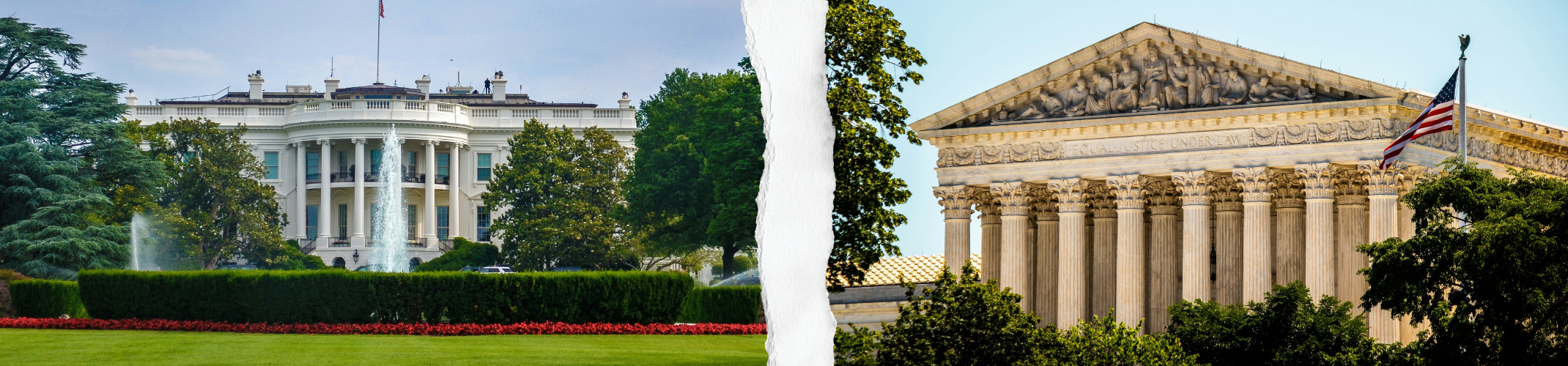
The Supreme Court of the United States has issued a landmark decision invalidating tariffs imposed under the International Emergency Economic Powers Act (IEEPA). The ruling marks a significant development in U.S. trade law and raises important questions for importers, customs professionals, and supply chain leaders across the country.
While the Court’s decision clearly addresses the legality of the tariffs themselves, it leaves unresolved the practical question that many businesses are now asking: what happens to the billions of dollars already collected?
Understanding IEEPA and Its Limits
IEEPA was enacted in 1977 to grant the President authority to respond to declared national emergencies involving foreign threats. Historically, it has been used to impose economic sanctions, freeze foreign assets, and restrict financial transactions.
It was not traditionally used as a mechanism for broad-based tariff policy.
The Trump Administration relied on IEEPA authority to impose certain tariffs tied to national emergency declarations. That use of authority was challenged, leading to this Supreme Court review.
The Court has now determined that IEEPA does not authorize tariffs in the manner they were imposed. In effect, the statute does not grant the executive branch the power to use emergency economic authority as a substitute for tariff-setting powers traditionally governed by Congress.
This is a statutory interpretation decision, not a policy judgment about tariffs generally, but its impact is substantial.
What the Supreme Court Actually Said
The ruling invalidates the IEEPA-based tariffs. However, it does not provide procedural guidance on how to unwind them.
Justice Brett Kavanaugh made this explicit in a notable observation:
“The Court says nothing today about whether, and if so how, the Government should go about returning the billions of dollars that it has collected from importers.”
That sentence is critical. The Court resolved the legality question. It did not address the administrative mechanics of refunds, protests, or reimbursement processes. In other words, the constitutional issue has been decided. The operational issue has not.
What This Means for Importers
From a financial standpoint, the stakes are significant. Billions of dollars were collected under the now-invalidated tariff authority.
However, several key questions remain unanswered:
- Will refunds be automatic or require formal claims?
- Will prior liquidation deadlines affect eligibility?
- Will Congress intervene legislatively?
- Will additional litigation determine next steps?
During a press conference following the ruling, Trump suggested the status of the money collected from tariffs was unclear and said, “I guess it has to get litigated over the next two years.” Additionally, in that briefing, Trump announced an additional 10% global tariff.
All of that being said, until Customs and Border Protection (CBP) issues formal guidance, companies should avoid speculative filings or procedural moves that could complicate future eligibility. The companies best positioned in moments like this are those with clean audit trails and organized historical import data. From a compliance perspective, the focus should be on documentation readiness:
- Maintain detailed entry records
- Preserve payment confirmations
- Track impacted tariff line items
- Monitor CBP messaging and Federal Register notices
Broader Trade Policy Implications
This ruling reinforces a structural principle: tariff authority is not unlimited under emergency economic statutes.
The Trump administration and future administrations may still pursue tariffs under other legal authorities, such as Section 301 or Section 232, but the Court has clarified that IEEPA is not a broad substitute for congressional tariff powers.
For supply chains, that clarity may bring greater predictability over time. Emergency powers have limits. Statutory interpretation matters.
In an era where global trade policy can shift quickly, judicial boundaries help define where executive flexibility ends.
Practical Guidance for Businesses Right Now
The Supreme Court’s decision striking down IEEPA-based tariffs is a significant legal milestone. It clarifies the limits of executive authority under the International Emergency Economic Powers Act.
However, it does not yet clarify how the government will handle the billions collected from importers.
At this stage:
- No immediate filings are required.
- No refund process has been announced.
- No official CBP instructions have been published.
Companies should:
- Continue normal customs operations.
- Preserve documentation.
- Monitor official CBP communications.
- Stay in close contact with trade compliance advisors and customs brokers.
Premature action can be just as risky as inaction.
Stay in Control with Sheltered International
Global supply chains are constantly shifting. SiShips puts the shipper in control, offering efficient and cost-effective ways to transport your product.
To learn more about our personalized expertise and state-of-the-art software, contact us today.