Sheltered International, Author at SiShips - Page 11 of 13

Skip to Content

Congestion Clear Could Start Spring for Los Angeles-Long Beach

Recent Posts by Sheltered International

Congestion Clear Could Start Spring for Los Angeles-Long Beach

With Near-Record Container Volume Reached LA-LB Ports Could See a Clear as Soon as April


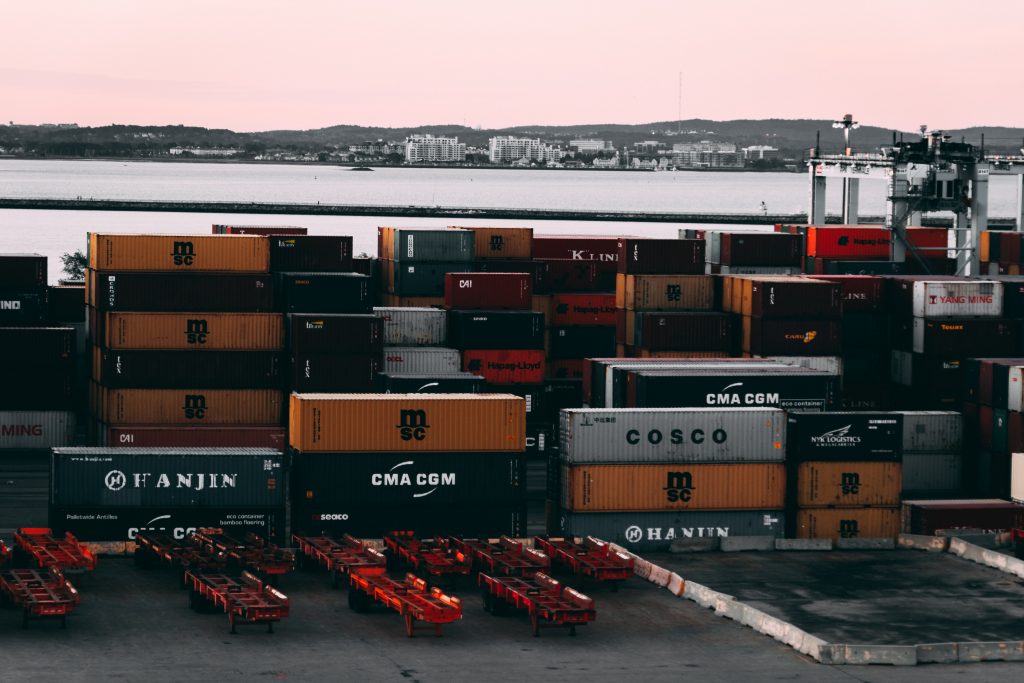
Even with improved productivity last month, the ports of Los Angeles and Long Beach are facing backlogs and extreme terminal congestion that they believe will continue well into spring. This congestion has been ongoing for the last 6 months. 

The near-record container volumes they are experiencing are expected to go into the spring but terminal operators are hopeful that the vessel backlogs will return to near normal rates between April and June. 

COVID-19 Effects Linger

To be able for these ports to begin fluidly functioning again, there must be a focus on widespread COVID-19 vaccine distribution among longshoremen. Due to the spreading of the virus within this port, they have been suffering from labor shortages. Resulting in the congesting of these ports. Terminals have seen a large drop in container volumes in the past month, hopefully allowing a move of the current backlog of containers. 

“Terminals are full. There’s nowhere to put the containers. We’re 35 percent below what we normally do on deliveries (on trucks)” Ed DeNike, president of SSA Containers stated. 

shipping delays

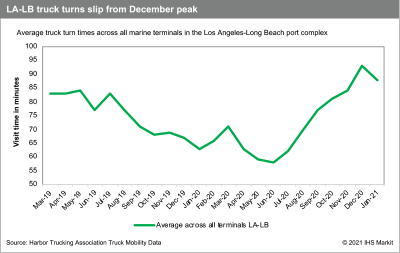
January average truck time visits dropped roughly by 5 minutes from the December average of 93 minutes, as shown in the graph. In June, before the import spike, truck times were at an all-time low of only 58 minutes according to Harbor Trucking Association. 

The backlogs in Los Angeles- Long Beach are responsible for ships being forced to anchor while they await berths to be unloaded. In the first week of February, there was a total of 34 ships anchored waiting to be unloaded while all berths were occupied. 

“The longer containers stay at a terminal, the more congestion they create. Congestion creates the need for extra and unproductive moves when containers pile up more than they should,” said Jessica Alvarenga, PMSA’s manager of government affairs.

Employee Shortage and Increased Shipping Demands

Much of this congestion comes back to the main cause, the COVID 19 pandemic. The labor force has been hit hard in the Los Angeles-Long Beach area. According to the Pacific Maritime Association (PMA), there have been around 600 known cases documented since December. This combined with increased shipping demands has decreased timely productivity extensively.

The employees who are responsible for unloading and loading the containers from the ships have been hard to keep fully staffed. This position is essential to the timely flow in and out of terminals. The daily assignment of workers throughout the ports has had to be decreased. Finding employees for these positions is difficult since they require a certain skill set. 

“It comes down to a labor issue at the terminals,” said Scott Weiss, vice president of business development at Port Logistics Group. “There are still bottlenecks in getting containers into and out of the terminals,” stated Weiss. 

Recovery Expected for Spring

Many well-established companies within the shipping industry believe hope is on the horizon. 

Scott Schoenfeld, general manager of Fenix Marine Services in Los Angeles believes “there could be congestion relief as early as April.”

With thoughts of a spring recovery on the mind, it is very plausible things could begin moving at an even more efficient pace than what has ever been seen before. Understaffed and highly congested these ports are still able to move ships in and out. Once staffing and import demand returns to normal, the system could move with ease.

“Drayage capacity is tight and worker availability is challenged at both ends of truckers’ routes, the marine terminals, and the distribution warehouses. However, workers will return in larger numbers when they feel it is safe to do so,” said Weston LaBar, CEO of the Harbor Trucking Association.  

“The single biggest thing we can do is vaccinate,” LaBar said.

How SiShips Can Help

We know the freight forwarding industry is consistently changing right now. We’re here to help you stay on top of new rates, deadlines, and more, so you can be confident you’re always receiving the best option available for your business.

To learn more about SiShips, or to view a demo of our software, contact us today.


4 Continue Reading →

Reliability of Containerships Drops to New Lows

Understanding the Effect of Tradeline Congestion on Containership Reliability

2020 disrupted the global supply chain in unpredictable ways and it appears 2021 has begun to follow suit. Containership reliability numbers have plummeted causing average shipment delays to increase. Within this post, we will discuss the cause and spread of this decline to ensure you understand the possible delays in current shipping schedules. 

A Sharp Decrease in Reliability 

During the last half of 2020, there was a widely apparent decline in the reliability of containerships arriving on-time. For the last 5 months, the reliability steadily declined to the lowest it has ever been reported since the benchmark was introduced by Sea Intelligence in 2011. In December of last year, it was reported that under half of the vessels had arrived on their scheduled arrival date whereas, during 2018 the same rate was well above 70%. Creating a significant drop in timely arrivals. In the year spanning from December 2019 to December 2020, the on-time arrival rate had a decline of over 30%. With these numbers, containership arrivals are more unpredictable than ever. 

Tradeline Congestion Causes Reliability Decrease

The surge in demand that was brought on by a global lockdown has flooded ports worldwide and the capacity of significant tradelines has been reached. This congestion results in a slowing of all containership arrivals. Sea Intelligence Consulting chief executive Alan Murphy warns that “With continued widespread port congestion, and with carriers still not letting off capacity-wise (especially on the major trades) shippers might not see improving schedule reliability until the second quarter of 2021.” Meaning these delays will be present well into this newly began year. 

The Spread of Reliability Decline Across Carriers 

This decline is apparent across all carriers’ reported numbers for the last half of 2020. Within this time frame, there was not a single documented carrier that managed to improve their year to year reliability. Along with the decrease in reliability, comes a greater occurrence of vessels arriving later than expected. A vessel’s current average delay is reported to be around 5-6 days, as compared to last year’s average delay of about 4 days. Currently, within the US the decline in reliability is at its lowest. There is roughly a rate of less than 1 in 3 for containerships avoiding delays. 

How Sheltered International Can Help  

With these unpredictable declines, there is no time more critical than now to choose the best possible company for your shipping needs. With Sheltered International we can ensure the quickest and most reliable options for your company when current circumstances are not so reliable. 

To learn more about SiShips, or to view a demo of our software, contact us today.

0 Continue Reading →

Sheltered International Gets a New Look for 2021

Refreshed SiShips Software, Updated Logo Are Just the First of Big Changes Coming for 2021

At Sheltered International, we believe that challenges inspire innovation. Although 2020 has had some unexpected obstacles, we’ve also been challenged to continually improve our software and deliver the best possible experience for our clients. As we enter 2021, we’re striving to maintain that momentum. That’s why we’re very excited to announce that we’ll be launching a software refresh for SiShips on January 1, 2021, featuring a brand-new logo and custom designs developed in partnership with our new design team in Budapest. We’re confident that this new look will help SiShips continue to provide excellent service for your freight forwarding needs.

Introducing Our New LogoSheltered International New Logo

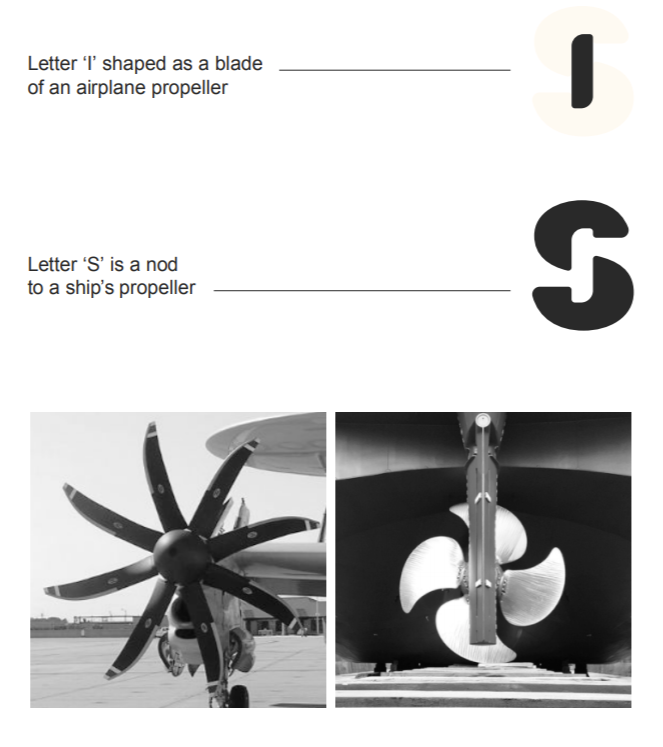
Featuring a combination of our initials “S” and “I”, our new logo was inspired by the blade propellers on ships and airplanes. This inspiration draws not just from our brand identity but our focus: to bring our clients the best shipping solutions, both by air and by sea. “We are really excited about the new branding and user interface being led by our design team in Budapest,” said Sheltered International CEO Andrew Ciccarone, “The main challenge was to refresh without restarting. Pulling inspiration from the propeller shape was genius.”


Sheltered International Logo Redesign

Custom Google Maps Design

To ensure your experience within SiShips is optimized for efficiency, we’ve also refreshed our map design. Used to power our live satellite tracking, Google Maps is a key part of our software, and with a sleek, minimal look, it’s easy for you to find the information you’re looking for without all the clutter. Thanks to simplified shipment tracking visuals, you’ll be able to save time and enjoy a sleek, streamlined shipping experience.

SiShips Satellite Tracking

Coming Soon: The SiShips Mobile App

Our updates for 2021 don’t end with a refreshed software: We’re thrilled to be releasing a SiShips mobile app, launching in Q2 2021. Offering even more flexibility and mobility, the app will let you track your shipments, generate quotes, and manage your freight all from your mobile phone. We know you’re busy building your business – that’s why we’re here to help you earn back your time and reinvest it where it counts.


Want to learn more about SiShips and how it can help you build your business? Contact our team today.


1 Continue Reading →

How Imports Have Been Impacted by COVID-19 in 2020

Understanding How the Pandemic Has Affected Freight Forwarding This Year and Anticipating Future Changes

It’s no surprise that the COVID-19 pandemic has significantly impacted the global supply chain. From transportation to manufacturing to distribution and retail, all industries have experienced new challenges this year – challenges that will likely continue through at least Chinese New Year. To help you understand the factors that may impact your shipment, we’ve broken down how COVID-19 has affected shipping logistics this year so far.

Changes to Production and Demand

As COVID-19 spread around the world, international lockdowns halted production and slowed global economies in an unprecedented way. From April through June, global volumes came to a standstill. The limited products available for shipping experienced slowed journeys as cargo was stopped at origin or destination ports for various quarantining procedures.

By July, however, China had returned to full production, boosting availability and, subsequently, demand. This demand has not slowed: w=While September and October always see large order volumes from China as retailers prepare for the holidays, American imports from the Asia Pacific were 23.7% higher in October of this year than last year, and 10% higher than the month prior.

Globally, output increased in 22 of 26 subsectors in October, with automobiles and parts, banks, chemicals, and machinery and equipment representing the top performers.

Impacts of COVID-19 on Transportation

COVID-19 Impact on Shipping

Sluggish demand in the spring forced ocean carriers to blank sailings to cut losses, while reduced air traffic significantly reduced capacity in the skies as well. However, as sales picked up exponentially, carriers found themselves faced with the opposite problem: A surge of demand outweighing available cargo space.

Workforce shortages and various quarantine regulations slowed the devanning process, lengthening container churn from 1-2 days to 5-7 days. Despite carriers shortening container free time and increasing demurrage and detention charges, this reduced pace still created a build-up on the supply chain. Further fueling the imbalance, carriers struggled to get their equipment back to the origin ports where it was needed.

At the ports, the trucking industry was also impacted by surging volumes. Long lines and road congestion significantly lengthened the time needed to get containers out of and back to ports, generating a chassis shortage and slowing transport times. Able to move fewer containers than normal, trucking companies struggled to cover their costs.

Adjustments to Rates

Motivated by high export rates from Asia, carriers reduced the number of full containers available on the back-haul voyage to China, forcing customers to book more LCL in place of FCL shipments. This has further impacted the capacity shortage, driving up the cost of additional space. Likewise, lack of space on vessels forced cargo owners to pay a premium in spite of FCL contracts.

With all of these factors, shipping rates around the world have significantly increased. From Asia Pacific ports to Los Angeles, many rates doubled. From China to Europe, they tripled, with some containers moving at a rate of more than $8,500 per 40’. Even the typically stable Intra-Asia lanes experienced heavy rate increases.

How SiShips Can Help

We know there are a lot of changes impacting the freight forwarding industry right now. We’re here to help you stay on top of new rates, deadlines, and more, so you can be confident you’re always receiving the best option available for your business.

To learn more about SiShips, or to view a demo of our software, contact us today.

0 Continue Reading →

Using SiShips’s New Deadline Tracking Feature

Managing Holiday Deadlines, Port Congestion With Deadline Tracking

With the holidays quickly approaching, conditions continue to deteriorate at US gateway ports. Congestion has already significantly impacted ports around the country, particularly along the west coast, subsequently driving up trucking rates and drastically slowing delivery times. To be expected around the holidays, surging ocean freight demand is placing the system under even greater stress. This year, however, this has been compounded by equipment shortages, overbooks, blank sailings, and existing port congestion.

To combat these obstacles, we’ve added a new Deadline Tracking feature to our SiShips software. With Deadline Tracking, you can better predict how your shipments will be impacted by potential delays. This knowledge will allow you to make informed decisions for your business during the holidays. Read on to learn more about how to use this new feature.

Holiday Port Congestion

With holiday shoppers choosing e-commerce options over in-person ones, shippers are being tested to keep up with demand. West coast ports, in particular, are experiencing drastic increases in capacity: The Port of Long Beach handled 806,603 TEUs in October, breaking its previous record that had only been set in September.

Unsurprisingly, major online retailers like Amazon are a key factor in driving this surge: last month, 79% of Amazon’s shipments arrived via Los Angeles/Long Beach. Overall, e-commerce sales have increased 19.9% year on year, and experts predict sales in November and December alone will see a 33% year on year surge.

How to Use Deadline Tracking for Your Shipments

Ocean cargo shipments can be complex, particularly with the many added factors currently at play. Our Deadline Tracking was designed to simplify the experience and provide you with valuable knowledge.

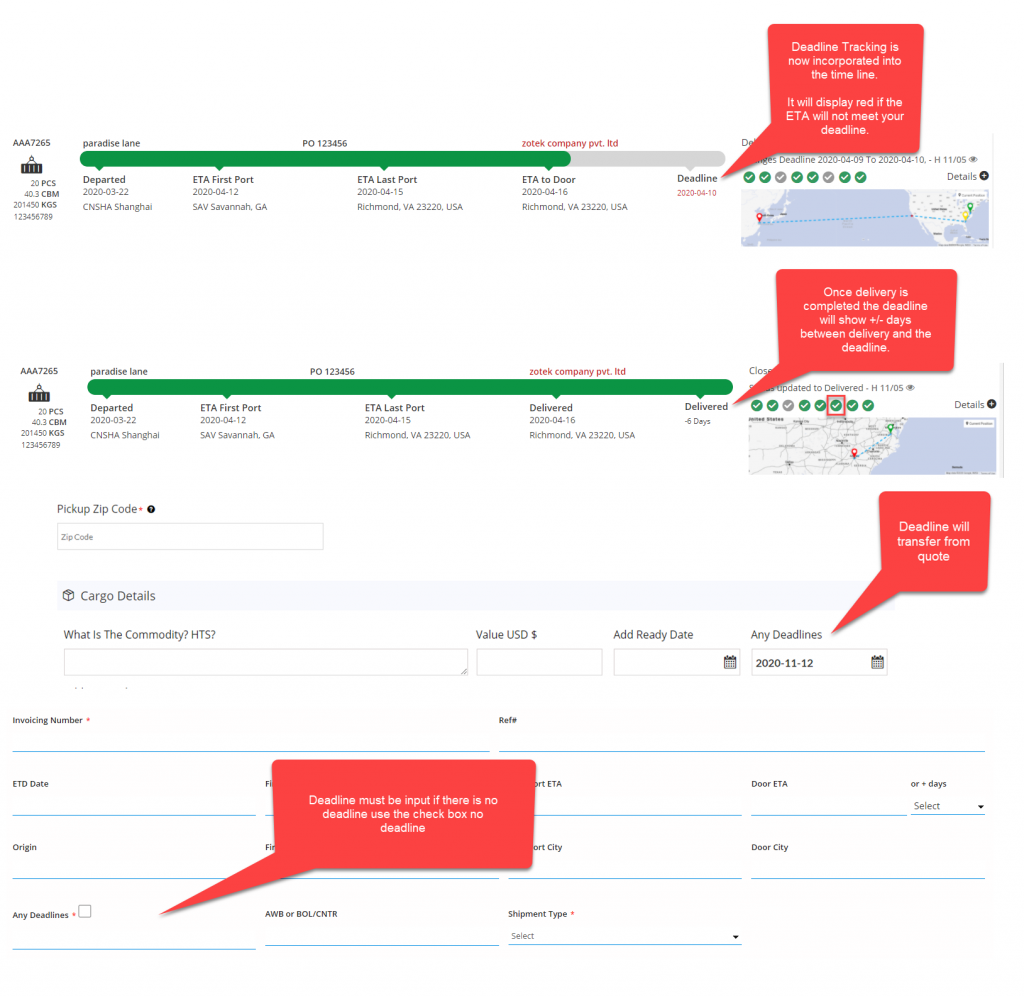
Incorporated into your shipment’s timeline, the Deadline Tracking feature will display in red if the ETA will not meet your deadline. Note that if there is no door delivery option, the deadline will use the last port date.

Once your freight has shipped, the deadline will transfer from quotes and bookings into tracking automatically. Once the delivery is completed, the deadline will show the difference (+/-) between delivery and desired deadline.

Don’t have a deadline? Just tick the box next to “Any Deadlines” to skip this step.

Deadline Tracking SiShips Freight Forwarding


We know managing shipments can be difficult. That’s why we used our extensive years in freight forwarding to develop SiShips. With this software, quoting, tracking, and planning are made easy, so you can spend less time worrying about freight forwarding and more time improving your business.

Contact us today to learn more about how SiShips can simplify your shipping experience.


1 Continue Reading →

SiShips Adds Full Container Rates from Europe

Partnership with European Group Provides Expertise, Instant Quotes for Major EU Ports


We are pleased to announce that we’ve expanded the auto quoting function of our software SiShips to now include European shipping lanes. With booking available directly through our system, auto quotes are an efficient way to ensure you’re getting the best rates for your shipment and can save you and your business valuable time and money. “Expanding our instant quoting service to Europe means increased carrier options, capacity, and rate transparency – all at our customer’s fingertips,” says Sheltered International founder Andrew Ciccarone. Read on to learn more about the new function.

Providing EU Full Container Rates

While SiShips previously offered auto quotes from Asian ports, European ports were more complex. “The EU market is very diverse, with many small countries each requiring niche market knowledge,” explains Ciccarone. “This can make the market particularly difficult for a customer to navigate efficiently.”

Although SiShips already provides spot quotes for European shipping lanes, we wanted to provide the ease and efficiency of auto quotes for those clients shipping from Europe as well as from Asia. The solution? Partner with a European business, combining its expertise with that of Sheltered International. “Our partner in the EU was established in 1968, has more than 40 offices in 25 countries, and over 100 million euros of purchasing power,” says Ciccarone. “SiShips technology combined with that expertise and purchasing power is a compelling benefit for our customers.”

How to Access Full Container Auto Quotes

Obtaining a full container quote in the SiShips system is easy. Simply click “Quotes,” within the software, then click “Full Container Auto Quote.” From there, input the origin city and destination. The software can provide auto quotes for ports in the following countries:

auto quotes shipping European ports

  • Austria
  • Belgium
  • Bulgaria
  • Czech Republic
  • Denmark
  • France
  • Germany
  • Greece
  • Hungary
  • Italy
  • Lithuania
  • Poland
  • Portugal
  • Romania
  • Slovakia
  • Slovenia
  • Spain
  • Sweden
  • The Netherlands
  • United Kingdom


If the port you’re shipping from isn’t available for an auto quote, our experts are available to provide a custom quote for your business. Simply request a spot quote and our team will get back to you with rates and routes available. Learn more about requesting a quote.


Ready to streamline your freight forwarding experience? From quoting to tracking, SiShips makes shipping easy, giving you more time to worry about building your business. Contact us today to learn more.

1 Continue Reading →

Understanding Harbor Maintenance Fees and Merchandising Processing Fees

Why You May See Additional Fees on Your Shipment Invoice

Harbor Maintenance Fees and Merchandise Processing Fees

Although some imports may be duty-free, this doesn’t mean they’re free of all associated fees. Two small taxes, Harbor Maintenance Fees and Merchandise Processing Fees, are often overlooked and may come as a surprise when you receive your invoice. Though small, it’s important to include these values when running calculations and preparing for shipments. Read on to learn more about what exactly these fees are and how they apply to your products.

Harbor Maintenance Fee

Established in 1987, the Harbor Maintenance Fee (HMF) is assessed by U.S. Customs and Border Protection and is used for exactly what its name suggests: port and harbor maintenance. As such, these fees are applicable only to ocean imports and are equal to 1/800 of the value, or .125 percent of the shipment. There are no exclusions – all imports will be subject to HMF, even if they are part of a trade agreement like USMCA.

The full list of ports and harbors with HMF can be found here.

Merchandise Processing Fee

Unlike the Harbor Maintenance Fee, the Merchandise Processing Fee applies to both air and ocean imports. At .3464 percent, it also has a minimum and maximum: $27.23 and $528.33, respectively. It’s important to note that these two values are accurate as of October 2020 and change annually – SiShips ensures the current values are always used for calculation. Further, be sure to only calculate MPF on the declared value of the shipment. The value of any cargo insurance or additional duty should not be included.

MPF also differs from HMF in that there may be some exceptions. Certain Free Trade Agreements may see these fees waived. Sheltered International is available to help you understand whether the MPF will apply to your shipment.

How SiShips Can Help

Take the worry out of calculating fees for your shipments and let our software do it for you. Built on years of experience in the freight forwarding industry, SiShips streamlines your shipping process at every step. With shipment management, tracking, quoting, and other services, our software saves you valuable time and lets you focus more on growing your business.

Learn more about how SiShips can improve your freight forwarding experience.

1 Continue Reading →

Supply Chain Congestion as Truck Rates Increase, Ports See Packed Capacity

Adjusting for Increased Truck Rates and Reduced Productivity

In a stark contrast to the shipping slowdown seen in the spring, ports in California are seeing significant surges of imports, operating at peak utilization. Subsequently, trucking rates have increased, reflecting the demand of companies looking to move products out of the ports and across the country.  At Sheltered International, our team is adapting to these increased rates, offering updated and flexible quoting options. Read on to learn more about current events impacting shipping, or contact us directly with questions regarding your shipment.

Ports Experiencing Peak Capacity

Demand for PPE, household wares, home exercise equipment, and other e-commerce goods shipped from Asia has stressed the capacity of ports in California, with LA and Long Beach operating at 105% capacity on peak days. As markets begin to reopen, Asian imports have increased 101% from March and year-over-year imports are up by 22%. With retailers eager to bring merchandise to the United States in advance of Lunar New Year and its respective shutdowns, ocean cargo capacity is being pushed even further.

Trucking Rates Increase

With port capacity pushed to the limits, terminal operators are unable to implement dual transactions and dray-offs, which typically are used to increase efficiency. As a result, truck turn times are on a steady decline, increasing from 58 minutes on average in June to 77 minutes in September. With reduced productivity, truck capacity is decreased, leading to a sharp spike in rates. Both truckload and less-than-truckload (LTL) rates are increased, with per mile averages up 54% from May and reaching $2.46.

Similarly, reduced productivity has increased container dwell times, consequently impacting port capacity to complete the cycle. As states reopen their markets at different times and with different regulations, demand varies significantly across the country; in conjunction with slowed delivery, this creates what Dean Croke, principal analyst at DAT iQ, calls a “network imbalance.”

How SiShips Can Help

During this heavy peak season, our team can provide your business with updated quotes. While we typically quote China-to-door delivery, we can now provide adjusted LA port-to-door quotes that reflect new rates. Alternatively, you may opt to select your own truck delivery method, using SiShips to obtain a port-to-port quote instead.

If you have questions, don’t hesitate to contact a member of our team. We’re here to provide you with the information you need to make the best freight forwarding choices.

Get in touch with us today for shipping support.

0 Continue Reading →

China’s Ministry of Transport Considers Ban on Rate Increases, Blank Sailings for US-China Trade Lanes

How China’s Intervention May Affect Capacity and Rates for Ocean Freight Long-Term

As ocean cargo rates continue to surge, China’s Ministry of Transport is taking steps to prevent any further increases. Last week, Chinese authorities discussed a possible ban on rate increases, which would apply to the GRI planned for mid-September. To boost capacity, they also suggested prohibiting the blanking of any sailings on the transpacific route, significantly impacting the ability of carriers to manage capacity and maintain a profit. Although nothing has been established as of yet, carriers and shippers alike should consider how this could impact their shipments.

China Ocean Freight Rates and Cargo Capacity

Increasing Rates Through Q2

In spite of COVID-19, ocean freight carriers around the world are seeing a year-over-year increase in profit. In fact, demand has made Q2 2020 the most profitable second quarter for carriers since 2010, with a total earned profit of $2.7 billion.

The China-US West Coast trade route has seen a particularly high demand, seeing rates soar by 146% YOY, as compared to the 21% increase seen on Asia-Europe routes. Despite carriers reinstating the majority of blanked sailings, demand is still outpacing capacity and an additional GRI was scheduled for mid-September. This rate increase would have been blocked by China’s ban. While the state-owned China Ocean Shipping Company (COSCO) and OOCL canceled rate increases – and Maersk was rumored to follow suit with rate cuts for both US west coast and east coast – most carriers have moved forward with a GRI. That said, the rate increases are lower than anticipated, suggesting China has had some influence.

Preventing Capacity Management

Adjusting capacity is crucial for freight companies to maintain revenue during times of flux. Although it’s anticipated that spot rates will unlikely to continue rising, thus making China’s ban on rate increases trivial, preventing carriers from adjusting capacity could have a significant impact. As the market slows, the inability for carriers to adjust could prevent them from stemming losses. “This would have an unprecedented impact on the market and, more worryingly, potentially derail the carriers’ ability to manage capacity in the face of extreme demand volatility,” said Lars Jensen of SeaIntelligence.

With so many factors impacting freight rates, it can be difficult to know if you’re getting the best price. That’s where SiShips comes in. Our software gives you instant access to auto quotes and custom quote options, allowing you to tap into our years of experience. That means less time spent worrying about your freight and more time to grow your margins.

To learn more about our software, contact us today.


2 Continue Reading →

Ocean Cargo Rates Peak as Demand Surges

Covid-19, Limited Capacity, and More Factors Have Driven Freight Rates to Set New Records

Although back-to-school season and holiday preparations consistently make August a peak season for ocean freight, this year is seeing a uniquely high increase – in both rates and capacity. The blanking of sailings earlier in the summer in response to the Covid-19 pandemic, combined with concerns over tariffs as the first trade agreement with China nears expiration, has generated a boom in demand that outpaces capacity. As a result, Asia-US West Coast spot rates have set new records, with Shanghai to US West Coast routes seeing a 167 percent increase from 2019.

Further, analysts are predicting another General Rate Increase (GRI) for trans-Pacific ocean cargo routes this month, marking the fifth since June 1. While earlier in the summer, increased rates were driven by significant numbers of blank sailings (a response to reduced exports from Asia due to Covid-19), these new GRIs are built on a surge of demand as inbound volume sees a year-over-year increase. We explored the factors at play in this increase, as well as potential future events that may impact rates further.

Spot Rates Increase Ocean Cargo

Capacity Versus Demand

Since the start of the year, capacity and demand have been drastically fluctuating. The onset of Covid-19 meant a sudden halt of economies, starting in China and Asia. With fewer imports – and lower consumer demand – carriers cut capacity radically, with 19 percent of total sailings blanked in May and 15 percent in June.

This summer, economies began to move again and US imports from Asia rose by more than 20 percent between June and July. In particular, a significant consumer demand for items like fitness equipment, at-home activities, and furniture, as well as the consistent demand for PPE, drove retailers to increase their imports to satisfy demand. Now, with only 3 West Coast sailings blanked for August and September, capacity is nearly back to normal – yet need for space is outpacing it. To combat this, carriers have added additional sailings from Asia, or “extra-loaders,” with 10 scheduled for August and an extra 5 for September; however, these additional sailings haven’t been enough to eliminate the capacity crunch, maintaining increased spot rates.

External Factors at Play

Beyond Covid-19, additional factors are also at play. Uncertainty surrounding the US-China trade deal has driven importers to bring their goods over from China earlier than normal, hoping to avoid the potential of a large tariff increase. Likewise, as the American election looms, importers and carriers alike are doing their best to anticipate potential shifts in the market.

Seasonal trends have also shifted – consumers are prioritizing furnishings and other goods for at-home use outside of their typical peak seasons and forgoing traditional purchases for this time of year like back-to-school gear or Halloween items.


We understand that tracking rates can be difficult. With years of experience in freight forwarding, we build our software SiShips. With this program, you can ensure your business is always receiving the best rate available – and get access to seamless cargo tracking, instant quotes, and more.

Contact us today to learn more about how SiShips can help streamline your import and export experience.


0 Continue Reading →


Recent Comments by Sheltered International

    No comments by Sheltered International