Sheltered International, Author at SiShips - Page 13 of 13

Skip to Content

How Importers Are Navigating Regulations to Reduce the US PPE Shortage

Recent Posts by Sheltered International

How Importers Are Navigating Regulations to Reduce the US PPE Shortage

Sheltered International Donates 3,000 Face Masks to Nassau County First Responders

As medical-grade masks become increasingly rare in the United States, many importers are turning to the PPE category in an attempt to reduce the shortage. However, businesses unfamiliar with the process of importing medical equipment may encounter obstacles with FDA registration and licensing, delaying the much-needed shipments further. With years of expertise in the freight industry, Sheltered International can help facilitate this importing process to ensure medical personnel and first responders can access this necessary equipment as soon as possible.

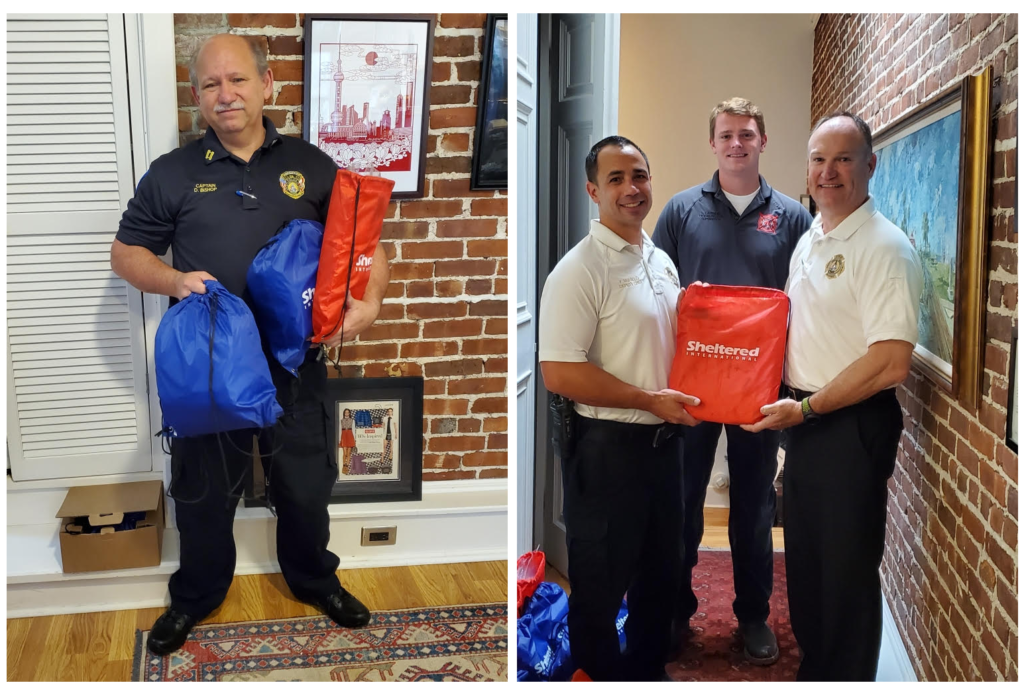
With this knowledge, Sheltered International has imported 3,000 surgical masks and 100 face shields, to be donated to local Nassau County first responders. Chief Hurley of the Fernandina Beach Police Department, Sheriff Leeper of the Nassau County Sheriff’s Office, and Kaleigh Simmons of the Fernandina Beach Fire Department will each receive 1,000 masks.

The Availability of Personal Protective Equipment

Though personal protective equipment is available, it is in limited quantities. Many importers new to the medical supply industry are looking to place large orders of surgical masks in numbers of five million or more. With only several factories in China producing medical-grade masks, this order can be difficult to fulfill. Instead, Sheltered International suggests placing smaller orders weekly, particularly for those new to the industry. An order of 50,000 masks a week is both more manageable and more likely to be filled.

Managing FDA Registration

To expedite the import of PPE, the FDA has reduced the amount of information required to register products for nonmedical use; however, for medical use both the factory and importer of record must register with the FDA. For the importer, this license costs $5,238. Sheltered International is available to help importers navigate the registration process, saving them valuable time and ensuring their shipment doesn’t get caught in customs.

Importers must also remember that both they and the shipper need FDA registrations. Though many factories, including toy factories and clothing companies, have converted their facilities to make surgical masks, these factories are often not FDA registered. As such, they cannot ship or market their masks for medical purposes. If looking to import as a medical supplier, importers can ask Sheltered International to confirm FDA registration of the factory.

Chinese Restrictions on Medical Exports

On April 10, China issued additional restrictions on exports, including a mandatory customs inspection. These policies affect any medical supplies, including medical masks, protective gowns, thermometers, ventilators, surgical caps, goggles, gloves, shoe covers, ICU monitors, disinfectant tissue, and disinfectant.

New restrictions require the shipper to provide an 18-digit Code of Customs Clearance Form of Export Commodity for customs clearance, attained after the product receives its export commodity inspection, or CIQ. If the shipper’s name is not the same as the factory’s, a contract must be established between the shipper and producer. These codes are required per shipment and can take at minimum two to three working days; however, with a significant uptick in applications anticipated after these new restrictions were established, this timeline may extend to five to seven days, though the application can be done during production. Though they are likely to slow production and importing of PPE, advocates of the restrictions say these regulations have been established to prevent counterfeit goods from entering the market.

Facilitating Imports of PPE

For importers unfamiliar with the medical supply industry, registering with the FDA and securing the necessary documentation can be overwhelming. With years of experience in customs and freight shipments, Sheltered International can offer valuable insight into facilitating this process and guaranteeing these much-needed supplies can be delivered to those who need them.

Contact us today to learn more about how we can ease your import experience.

0 Continue Reading →

COVID-19 Creates Shipping Disruption

COVID-19 freight shippingThe shipping supply chain is facing unmatched disruption as a result of the COVID-19 global pandemic. In over 60-years of global shipping history, the industry has never faced an interruption of this size. While China is finally showing progress in human and economic health, the damage on the supply chains is already done. There is no guarantee that factories will return to full capacity soon. China travel restrictions and quarantine efforts have prevented factories from receiving crucial components from their suppliers. The backlog of factory orders and limited travel options have stressed exporters, container lines and importers. What does this mean for the shipping industry, and how long is the road ahead to return to normal operations?

Cargo vs. Travel Restrictions for COVID-19

The Presidential coronavirus travel ban, proclaimed on March 11th and expanded on March 14th, bans travel to 26 European countries. This ban pertains specifically to travelers, not cargo. The CBP confirms cargo movement is not viewed as a viable form of transmission of the virus at this time. Crew members are also exempt from the travel ban. The Coast Guard issued a guidance in February stating that so long as a crew member does not display symptoms of COVID-19, they can assist in cargo shipment as usual. However, the crew may be subject to additional air screenings upon arrival. In the case of air freight, cargo flights may continue as usual with crew-only flights.

If CBP receives a different guidance from the medical community regarding cargo shipment and transmission of the virus, they will relay the information immediately and adjust practices accordingly.

A Shortage of Shipping Containers Leads to Jump in Spot Rates

Shippers are finding container equipment hard to come by in Europe due to an increase in blank sailings, leaving carriers unable to re position boxes. A blank or void sailing a sailing that has been canceled by the carrier. A blank sailing could mean a vessel is skipping one port, or that the entire string is canceled. While blank sailings can occur for multiple reasons, they commonly happen when demand for vessels is low.

Decreased Chinese manufacturing production due to COVID-19, paired with tariff pressures, decreased US imports from China in February to a near four-year low. This caused empty containers to stack up in Chinese yards while waiting for demand to return.

Now, after extensive preventative measures to slow the spread of the virus, Chinese factories are back up to 60% capacity. This increase in China imports, combined with capacity management by carriers and uneven equipment distribution, has led to an 18 percent increase in container spot rates this week from Asia to the US West Coast, and a 9 percent bump to the East Coast.

While US imports from China are increasing, short term demand from Europe is looking increasingly uncertain. Companies in Europe are experience a sharp drop in sales and will most likely refrain from ordering goods overseas to prioritize cash flow preservation. Uneven equipment distribution and uncertain demand could lead to delays re-positioning shipping containers once these special conditions pass.

Domestic Carriers Facing Interruptions

While Chinese imports are recovering, the shipping disruption is moving closer to home. The rapid spread of COVID-19 raises concerns regarding shipping and delivering goods domestically as businesses are urged to shut down.

On Monday, New Jersey became the first state to declare a curfew for non-emergency travel between 8:00pm and 5:00am. This curfew could raise issues for companies that receive trucks and shipments outside of normal working hours. In turn, this will raise demand for more precise delivery times during the day.

With the widespread closure of stores, warehouses, factories and distribution centers across the country and a surge of imports from China finally on its way, the process of shipping and receiving goods faces a problematic future.

Looking Ahead

The shipping industry faces an unbalanced and unpredictable near future due to COVID-19. However, analysts predict a strong rebound starting in fall 2020 or early 2021, driven by consumers beginning to spend money again and the resulting increased demand in goods and inventory.


The shipping industry can be unpredictable. Keep track of any delays or disruptions that might affect your business with SiShips.

Learn more about SiShips can simplify your freight experience.

0 Continue Reading →

Phase One of US-China Trade Deal Reduces Tariffs

Chinese and American Exports See Decrease in Duty Rates

As part of a Phase One Economic and Trade Agreement between the United States and China, signed on January 15, 2020, both countries have halved tariffs on many imported goods. The relevant duty reductions were applied on February 14, 2020.

China’s reductionsus-china trade deal will affect only the extra tariffs put in place on American imports last September. Tariffs on U.S. crude oil will drop from 5% to 2.5%, while total duties on soybeans are reduced from 30% to 27.5%. In total, this will affect roughly $75 billion of exports from the United States. China’s Ministry of Finance announced the reduction and stated it was designed to “advance the healthy and stable development of China-U.S. trade.”

Similarly, a White House spokesman stated the China trade deal “protects American innovation and creates a level playing field for our great farmers, ranchers, manufacturers, and entrepreneurs.” As of February 14, the U.S. has cut duty rates from 15% to 7.5% for a wide variety of goods, including any imports which fall under List 4A. These Chinese imports account for about $120 billion of goods. For List 4B, planned additional duties of 15% have been suspended. However, an additional $250 billion of goods will retain a 25% tariff, including Lists 1, 2, and 3.

For updated duty rates for all lists, see STR Trade’s compilation.

Effects of the China Trade Deal

International trade relationships with China have also been recently affected by COVID-19, which has shut down factories, seriously reduced the efficiency of ports and delayed supply chains across Asia. Former Macy’s CEO Terry Lundgren has stated that the combined effects of coronavirus and the Chinese trade war have revealed the retail supply chain’s potentially detrimental reliance on China. Similarly, American technology companies including Apple and Google are looking to reduce their reliance on China’s production. Supporters of the administration’s efforts agree that the trade war was a necessary step in forcing a shift away from dependence on Chinese production.

Most business leaders, including executives from Goldman Sachs Group Inc., Intel Corp., and Boeing Co., are in favor of the new trade agreement, though they hope these negotiations will continue.

In contrast, the deal has been criticized as being harmful to privately-owned businesses in China who can’t afford the more expensive American imports, allowing state-owned enterprises more market power. Additionally, as the agreement requires China to purchase $200 billion of American goods within two years, government-subsidized SOEs are likely to increase their share of imports. Critics of the China trade deal say this is counterintuitive to the Trump administration’s focus on reducing SOE’s influence over the economy. Trump trade advisor Peter Navarro has stated that these state-owned enterprises will be the target of “phase two” trade talks.

Stay Up-to-Date with Tariff Changes

SIShips makes it easier to keep track of international trade shifts and how they might affect your shipments.

Learn more about how SIShips can simplify your freight experience.

0 Continue Reading →

What to Know About Coronavirus and Its Effects on the Shipping Industry

How Coronavirus is Affecting Trade with China

After the outbreak of the SARS epidemic in 2002, medical experts called for stricter quarantine laws regarding international travel, and thus the shipping industry, in the case of a future outbreak. These regulations are now being put into place as coronavirus spreads through the Wuhan province in China. This quarantine is affecting factories in China as well as those in neighboring countries whose employees have been unable to return to work after visiting family in the Hubei region during the Lunar New Year. Reduced production, coupled with concerns for the safety of operating crews on board sea and air vessels, has resulted in significant disruptions for the shipping industry.

coronavirus shipping industryCoronavirus Quarantines and Reduced Exports

Many factories around China have been temporarily closed following the outbreak of the virus, with some not anticipated to open until March 1. With these facilities shuttered, exporters can expect to see similar effects as with the Lunar New Year, which sees the pausing of production for nearly three weeks annually. Delays are typically expected to continue for several weeks following the holiday as well but are being exponentially compounded by the effects of coronavirus. Major corporations, including Hyundai Motor, Deere & Co., and PSA Peugeot Citroen have all been affected by these closures and supply disruptions.

Sea Freight Shipping Demand

With limited production, demand for shipping containers is dropping rapidly, resulting in low freight rates. Sea-Intelligence, a maritime analyst, predicts a loss of $300-350 million weekly for carriers. Further, according to maritime data provider Alphaliner, major Chinese ports have seen a 20% decrease in ship calls since January 20. To combat this, sixteen Chinese ports are offering reduced rates in an attempt to lure liners back in. In contrast, nearby ports like South Korea’s Busan are experiencing spillover and rising container capacities. If these levels continue to rise, ports’ efficiency will be compromised, adding to potential delays.

This reduction has also led to lower demand for oil. With prices seeing a decline beyond the expected from Chinese New Year, refiners are being driven to negotiate and limit crudes runs.

Effects on Air Cargo

Air travel to China has been suspended by nearly all airlines, and flights to and from Hong Kong have also been halted. While some importers anticipated delays on shipments for the Lunar New Year, they are now experiencing disruptions beyond their predictions. Where ocean freight is seeing reductions in shipments, air cargo space is now extremely limited. Cargo on passenger flights has been redirected to available freighters, but these flights have also been drastically reduced or suspended entirely out of concern for the crew’s safety.

Short- and Long-Term Effects

With imports redirected and substantial disruptions in production and exporting, businesses should anticipate delays until mid-March. Experts agree that long-term consequences remain difficult to determine at the time; however, if the SARS epidemic is any indication, Chinese markets will manage to recover once coronavirus has been contained, resulting in only short-term interruptions.


The shipping industry can be unpredictable. Keep track of any delays or disruptions that might affect your business with SiShips.

Learn more about SiShips can simplify your freight experience.

0 Continue Reading →

Get to Know the Shipping Resource Center: 19 Tools to Help Your Business

Keep shipping simple with our calculators, converters, and more.

Managing your business takes a lot of time, and spending an afternoon Googling complicated acronyms or trying to calculate your shipment’s volume weight by hand should be the last thing on your to-do list. That’s why we’ve put all of our tools in one convenient place, ready to quickly answer any questions you might have throughout the shipping process. Just as SiShips guides you seamlessly through each step of the freight experience, our shipping resource center leads you to the knowledge you need.

freight shipping resourcesConversions Resources

No matter how good Gary in your shipping department may be at math, running numbers all day can be tedious. That’s why we’ve brought together three of our favorite tools that avoid human error and help save Gary time to work on more important things.

Found within our shipping resource center, the Currency Converter can quickly calculate the trade value for two different currencies. Powered by Bank of America, it offers always-accurate exchange rates. Next door, the Metric Converter is an easy way to convert your numbers, whether volume, pressure or another unit, into whatever system of measurement you may need – all with one click of a button. That means you can spend less time dividing out your metric tons and more time multiplying your margins.

Our favorite tool, though, is our Volume Weight Calculator. Simply input the dimensions and weight of each of your boxes to quickly determine the total volume weight of your shipment. With a precise calculation, you can be assured that your shipment costs are accurate too. Since we love saving time and money, this one makes us really excited. We’re pretty sure Gary would agree.

Information Resources

With six categories of containers and different size variations in each, you might feel spoiled for choice when it comes to choosing freight containers for your shipment. To help you narrow down your options, our Air and Ocean Containers tool gives you all the details on dimensions, volume, weight, door openings, and more. It’s all the information you need, found right within our shipping resource center, to become a true container guru.

We know most things are easier to understand when they come with a picture, so we’ve made an infographic to help you compare the eleven different Incoterms, or international terms of trade, that might apply to your shipment. Say farewell to the days of trying to remember if your shipment was DAP or DDP – and what that means for you as the seller. We’ve got it all laid out for you, with fun colors, through every stage of the shipment process.

As our infographic proves, acronyms aren’t just for texting teenagers anymore. If you’re scratching your head about what ICCO could possibly mean, we’ve got you covered. Explore our Acronym List for definitions of over 100 acronyms and terms, from BOTB (“British Overseas Trade Board”) to HVR (“Hague Visibility Rules”) and yes, ICCO, or “International Cocoa Council.”

Similarly, check out our list of Hazmat Definitions to make sure you don’t run into any trouble shipping fireworks (Class B Explosive) to France for Bastille Day because your hazmat certification is out of date. With this easily accessible list of terms, you’ll be sure to feel cool and confident with all of the shipping lingo.

Still need more information? Stay on top of industry news via our list of reputable resources, and dig deeper on trade information, including customs and economic indicators, with easily accessible links straight to the source.

international freight shipping resourcesWorld and Culture Resources

The world of international shipping is just that – international. This can make it hard to keep track of all the different elements that might affect your business. For example, anticipating Chinese New Year can help you avoid costly shipment delays, so make sure to keep track of relevant world holidays. Understanding current storm patterns can help you effectively communicate with your business partners – that why we offer a resource to stay up-to-date on the weather. Accidentally calling your shipping partner in Amsterdam at 3 in the morning is never a good idea, so we’ve included a world clock, and if you need the country calling code for the Netherlands we’ve got that too.

Plus, we’ve gathered maps of both the world and international sea ports so you can know just where your shipment is and help your daughter with her geography homework – it’s a win-win situation. With these resources right at your fingertips, you can avoid the unexpected and the stress that comes with it.

Government Resources

International shipping means international governments, customs, and laws. Our government resources help you stay knowledgeable about how these might affect your shipment and who to get in touch with if you need more information. For example, keep up to date with the Federal Maritime Commission to be aware of all things marine, and explore Forwarder Law to keep informed on current legal cases within the freight shipping world.

Need to do a little diplomacy? Easily search for the contact information of any international embassy or explore our curated list of worldwide customs contacts so you can put out fires without having to search online for a phone number first. It’s the next best thing to having the embassy on speed dial.

How can SiShips be a resource for you?

We understand how important it is to simplify the importing and exporting process. Just as these shipping resources make staying informed easy, SiShips is ready to make your freight experience smooth and straightforward. With our expertly designed software, we can save you time, money, and stress with every shipment. From quoting tools to customer management, SiShips offers methods to streamline each step. That means you can say goodbye to frustrating shipping experiences and hello to more time building the business you care about.

Want to discover how SiShips can change your import and export experience?

Get in touch with us.

0 Continue Reading →

Customers, Quotes and Tracking Made Easy with SiShips

How to Use SiShips to Manage Customers, Quotes and Shipments

Whether you are new to SiShips or have been with us since day one, it is clear that technology is the future of the transportation business – and the future is now. our management interface is Designed and built based on our years of shipping and customs expertise, SiShips is intuitive and useful. It guides you through each step of the shipment process, from creating and managing customers to generating accurate quotes to tracking shipments. Read on to explore each element of our software and see how it can help you streamline your import and export experience.

Creating Customersfreight forwarding with SiShips

Your customers are the backbone of your business. Managing them should be simple and seamless – which is why we created a tried and tested user experience that will save you time, money and stress.

To create a customer through SI Ships, simply choose the customers tab and then select “add customer.” From here, you can add any relevant information about your customer that you need, including their name, email, birthday and logo.

Then, you’ll choose a markup. We offer preselected markups that have worked best through our years of experience, with different tiers for different customer sizes. Markups can be adjusted for individual shipments or for specific customers as well.

Quoting Your Customers

It’s a busy week, and your desk is overflowing with to-dos. You need to get out quotes in a timely manner, but another department needs you, pronto. Luckily, you have Sheltered International at your fingertips, so you can develop estimates at the click of a button (and get back to putting out that fire).

Creating quotes allows for quoting air, less than container loads (LCL) or full container shipments – all instantly. Once your customers have been created, you can track their documents or holds, as well as your estimated profit from different quotes.

To put together a quote, simply input the origin and destination information. Then, you can compare ports, which can be filtered by cost or routing. If you have a more complicated quote, (or our auto rate system can’t accommodate your shipment), our custom quote tool is your MVP. This feature can manage shipments which may need a door pickup or delivery outside the US or may be overweight or oversized. It also allows you to provide Sheltered International with detailed information, helping us give you a fast and accurate custom quote. By providing you with all of the information available, SiShips can help you make informed decisions and offer your customers the best quotes possible.

Tracking Shipments

Transparency within tracking is the key to peace of mind. Our unique tracking feature offers complete clarity for your shipment’s progress. With a search feature plus filters, you can locate your shipment easily, and track it around the globe. We also show key milestones, quality assurance checkboxes updated by our operations team as your shipment moves forward. If you have any modifications to pickup or delivery, you can easily get in touch with our team here as well.

Beyond your shipment, you can also manage important documents through SiShips, including bills of lading, commercial invoices and the packing list.

If you’re busy, we offer automatic email reports to be sent to you and your team for effortless updates. You can even customize these notifications, allowing different teams or managers to receive only the notifications which are relevant to them.

With simple and consistent notifications and reports, you can spend more time focusing on your clients and their quotes – and of course, building your margins!

Are you ready to learn how Sheltered International can change the way you move freight?

Get in touch with us.

1 Continue Reading →

Sheltered International Overseas LATAM Manager Jose Esteban

Freight Forwarding Latin America Manager Shares Commitment to Customer Satisfaction

Jose Esteban joined the Sheltered International team in June of 2018. As the Overseas LATAM Manager, he is the driving force for our Bogotá office. With more than six years of experience in the International Trade business, he is an invaluable addition to the team. As a professional in International Trade, he possesses special knowledge on air freight exports and imports. He boasts over nine years of customer service experience with a special focus on customer satisfaction, which shines through in how he manages freight forwarding at our Sheltered International Bogotá branch.

Born in Bogotá, Colombia, Esteban studied financial analysis and graduated in 2012 with a commercial and strategic focus. Before joining Sheltered International, Esteban spent nearly five years at DHL Global Forwarding, and ten months with Damco. His passion for the logistics business is rooted in his commitment to constant improvement. In the world of logistics, keeping up with the ever-changing world is the name of the game. Esteban thrives in an environment that provides constant innovation and opportunities to guarantee customer satisfaction through the changing of the times.

Freight Forwarding LATAM ManagerHow long have you worked at Sheltered International?

I started at Sheltered International in June 2018, so about a year and a half.


What does your day-to-day entail at the Bogotá office?

I’m in charge of the performance of the BOG team. Mainly, I support the Pricing and Sales Development Department. I also act as OPS support or back-up when the team needs it. Additionally, I maintain the administrative tasks involved with managing a branch office, from making necessary payments, meeting obligations and supporting Human Resources when necessary.


Why are you passionate about your job?

Every day is an opportunity to learn something new. The world never stops. In logistics business, you need to move forward with that movement to be prepared for the future challenges. We also commit to working as a team to keep growing on a personal and professional level!


What do you enjoy doing outside of work?

While I like to read, enjoy time with my family and friends and practice sports, I also enjoy some extreme activities. Adrenaline makes me feel alive! In fact, I do a lot of activities, read, enjoy time with my family and friends and practicing some sports but mainly some extreme ones, I like to feel the adrenaline because makes you feel alive! For example, I enjoy sky diving and want to one day become a professional sky diver.


What do you feel like is the most helpful online resource or tool Sheltered International offers within the platform?

I think the Quoting tool is very useful for all the customers and Sheltered International staff. It saves both time and effort by providing competitive pricing quickly. Also, the tracking view is amazing. It’s important to our customers to have updated and accurate information about shipments that they can view in real time!


How does having an office out of Bogotá give you leverage internationally as a company?

Our Bogotá office helps grow our business. Our professional team works hard to give customers all they need and share those customer experiences with the other office. This gives us more visibility and new ideas to keep improving each day. At the end of the day, it’s a win-win. We cover all the customer needs and our business gets stronger each day!


What insights do you predict for 2020 within the shipping and transport industry?

As I mentioned before, in the logistics business the world never stops. We need to constantly move forward to prepare for future challenges. There will continue to be a need for freight forwarding because customers will always need to move their shipments around the world. Focusing on continued improvement and customer satisfaction is the key to becoming customers’ first choice and to help improve lives all around the globe.


Ready to Transform Your Freight Forwarding Experience?

Schedule a demo with Sheltered International today.

0 Continue Reading →

Sheltered International Founder Andrew Ciccarone

Sheltered International CEOSheltered International Founder Shares Journey of Transforming the Freight Forwarding Experience

Andrew Ciccarone knew the freight forwarding industry was in need of a technological face lift. After graduating from Florida State University in January 2011, he became the East Coast Manager for an international freight forwarding and customs service. After four years with the company, he became restless. Armed with a knack for technology and a natural entrepreneurial spirit, Ciccarone couldn’t help but notice a resistance in the industry to keep up with advances in technology. He saw clear opportunities for improvement in the freight forwarding experience and decided to make a change.

In March of 2015, he became the founder of Sheltered International. His venture focuses on technology to improve freight services, whether it be by air, ocean, rail or truck. The technology solutions give complete visibility to clients, from quoting to tracking. Nearly five years later, Sheltered International is changing the game in the freight forwarding industry. Read on to learn more about Andrew’s entrepreneurial journey and Sheltered International’s innovative services.

What inspired you to launch Sheltered International?

Straight out of college, I successfully opened a branch office for another customs brokerage and freight forwarder. After a few years, I felt bored because the company was very traditional and not interested in adapting technology.

At the time, I had my own line of sunglasses, which I was designing and selling online, so I was very familiar with building and designing websites. I felt there was a better way to use technology to improve a customer’s freight forwarding experience. So, my two business partners and I decided to open Sheltered International to be a technology-focused freight forwarder and customs broker.

How is Sheltered International different from other transport providers?

Our online portal, Siships, truly sets us apart. We spend a lot of time thinking about customer problems and are constantly updating the platform to improve customer experience. We listen to our customers. In fact, some of our best functions were suggested by customers.

How did SI come to operate out of Fernandina Beach, FL?

Now that we can do customs brokerage, electronically we can work from anywhere. A traditional freight forwarder is typically located in a rundown building in an industrial area. Our office is located above the fudge shop on Center Street in the historic district on Amelia Island. Whenever we have a visitor they normally comment that they never have seen a freight forwarder in such a nice office.  It’s a really nice place, please come visit!

What are some of the most popular tools and resources SI offers to agents and customers?

For our agents, I think it’s access to our staff.  Our typical agent is a domestic freight broker who has relationships with international shippers, but didn’t have access to experts. So, they didn’t feel comfortable selling the service. When they partner with us, agents get the support of our vast global network and experienced staff in addition to Siships, giving them all the tools to win more business.

For our customers, it’s our tracking system within Siships.  The number one complaint we hear when on-boarding a new customer is that their old forwarder did not provide enough communication.  Siships is the perfect tool because it allows us to build customized communications across email, phone and online which we customize to any user’s preferences.

What is the latest tech update within the platform, and what’s on the horizon?

Our newest update is the booking function.  It allows customers to go into our platform and schedule bookings directly from our website. Next, we are developing vessel satellite positioning into our tracking.  It will allow users to know the exact location of their cargo on any ship worldwide.

Ready to Transform Your Freight Forwarding Experience?

Schedule a demo with Sheltered International today.

1 Continue Reading →

Is Your Business Prepared for the Chinese New Year?

Chinese New Year Shipment Advice


The Chinese New Year, also called the Spring Festival, is China’s most important holiday. This year, the festival begins on January 25th, 2020. Similar to Thanksgiving or Christmas in the US, people travel back home during the holiday season to spend time with their family —with one giant difference. All Chinese offices and factories close for nearly three working weeks, allowing workers in coastal Chinese cities to travel to their inland homes.

The period of increased travel surrounding CNY is the largest human migration in the world.
If you are wondering why one of China’s largest holidays matters to your business halfway around the world, sit tight. Since China is a major player in the global exporting industry, CNY plays a huge role around the world for retailers who rely on imports from China.

How to Plan for the Chinese New Year

The only way to get your business through the Chinese New Year is to plan. It’s hard to fathom all businesses shutting down in the United States for 3+ weeks, but in China, that is the reality. Although the holiday technically only lasts for one week, many factories and businesses shut down about 10 days before the Spring Festival to allow time for workers to travel home. Understand that once the holiday preparation begins, shipments out of the country are impossible. There is no way to avoid CNY. It happens every year and requires advanced planning to minimize interruptions for your business.


Create a Forecast and Increase Inventory Before CNY

Start preparations by analyzing sales patterns of previous years to understand how much inventory you’ll need surrounding the Chinese New Year. Stock up on inventory accordingly to ensure you’ll have enough product to last you through the holiday.

Here’s a tip: Look at what orders your business needs to receive in March. Since all exports will be closed for the Chinese New Year, arrange for 50% of the March volume to be delivered in January and 50% in February instead.

Remember to plan for after CNY. Factories are often slow to ramp back up after the New Year. With workers travelling and some opting to switch positions over the holiday, it’s important to plan for factory delays for 3-4 weeks after the holiday as well.


Book Cargo Pick-up in Advancebook cargo early for chinese new year

In addition to factories taking time off for New Year, many of the trucking companies and air and ocean carriers do as well. This leads to heavy volumes of shipments before the holidays and a limited amount of space. With increased demand and limited supply, the price rises on shipments made right before the holiday.

Additionally, waiting too long to book cargo pick-up runs the risk of carriers meeting max capacity and shipment delaying until after the holiday. Keep costs low and stay prepared by booking 14 to 21 days before your cargo is ready for pick up.


Create a Quality Management Plancheck quality during chinese new year

In a mad dash before the holiday, factories often rush to fulfill orders. This last-minute scramble leads to more quality issues than normal as the pressure rises to get product out the door. After the holiday, many factories need to hire new workers to replace any who opted to change positions during the holiday break. These new workers may make more mistakes as they go through training and the factory gets back up to speed.

To avoid a damaged shipment right before CNY, order in advanced and step up your inspection efforts. This gives your business time to inspect incoming orders and rectify any shipments with low quality standards. Having a quality management plan in place will reduce the risk of shipping defective goods to your customer’s door.


Know the Effects of the Chinese New Year and Plan for Success

While the date changes each year, the Chinese New Year is an inevitable annual occurrence. With proper planning and a keen understanding of the holiday, your business won’t skip a beat during this season.

LEARN MORE ABOUT TRANSPARENT, EASY AND FAST FREIGHT FORWARDING

217 0 Continue Reading →


Recent Comments by Sheltered International

    No comments by Sheltered International